Volunteers in Guatemala can make a practical difference by helping with nutrition, education, household health, and community projects. A reports that 46.7% of children under five face chronic malnutrition, which shows why ongoing support matters. But volunteering isn’t about arriving, helping for a few days, and leaving it there.
Programs such as Be Humanitarian connect volunteers with projects near San Andrés, close to Lake Atitlán, where local teams guide the work. Volunteers can support real needs while learning from the families they meet. Keep reading to discover what that work involves and how your trip can support lasting community efforts.
Guatemala Volunteer Impact Quick Reads
- Volunteers support local families through nutrition, education, and household projects.
- Clean water and local guidance help address health and community needs.
- Strong projects focus on lasting support that continues after volunteers leave.
What Impact Do Guatemala Volunteers Make In Local Communities?
Guatemala volunteers share their time and skills to support local projects focused on nutrition, education, and family health. However, the real impact goes beyond hours logged. It looks like a child getting school supplies, a family receiving a water filter, or a household learning to grow fresh food.
Through guided 8 to 11-day programs featuring ethical guatemala volunteer vacations with Be Humanitarian near San Andrés, volunteers support goals already set by local leaders. Daily service work lasts about five to seven hours and includes:
- Nutrition & Farming: Improving access to healthy food and home gardening.
- Education: Handing out school supplies and helping with English lessons.
- Household Health: Distributing water filters for safer drinking water.
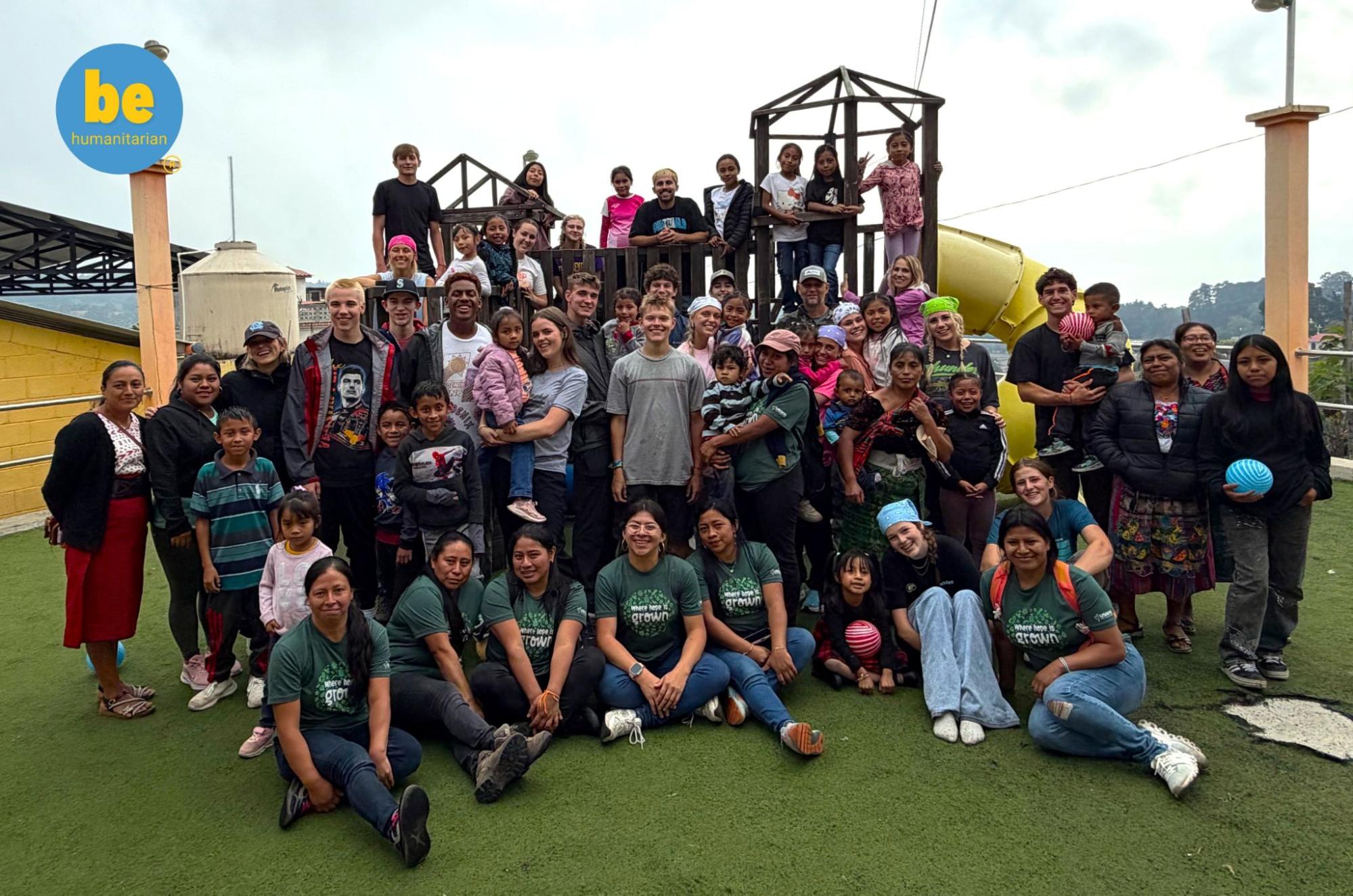
- Community Connection: Playing games with children and building relationships with local families.
Volunteers do not take over existing efforts. Local teachers and leaders remain at the center of the work, while volunteers provide the extra hands needed to help those projects succeed.
How Guatemala Volunteer Programmes Address Child & Family Nutrition
Guatemala faces a severe nutrition crisis, with around 47% of children under five suffering from chronic malnutrition and stunting. Because a single meal cannot solve long-term hunger, volunteer projects focus on sustainable food security alongside immediate relief.
Through sponsorship and local partnerships, volunteers support holistic nutrition programs by assisting with:
- Direct Meal Support: Preparing and distributing nutritious meals for children.
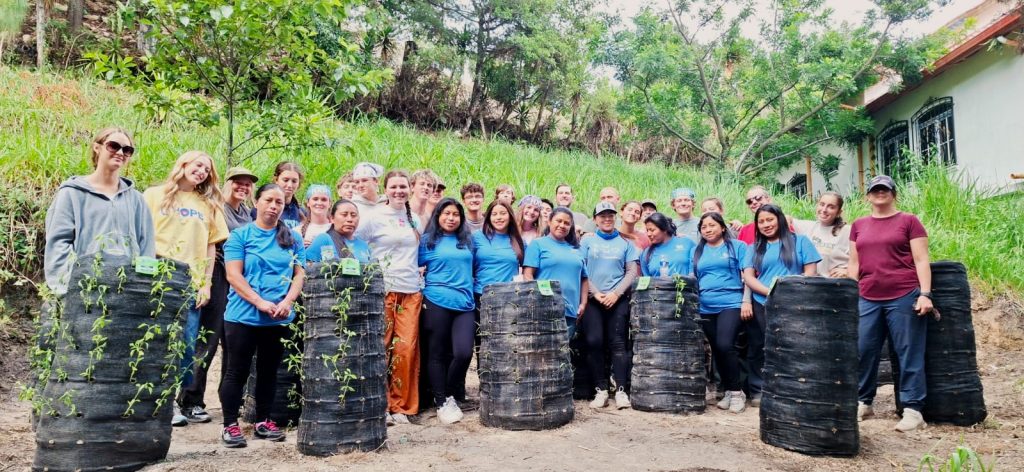
- Garden Towers: Setting up space-saving tower gardens so families can grow fresh produce at home, with some reported to yield up to 1,250 meals a year.
- Clean Water & Sanitation: Linking food access with health essentials like household water filters.
- Community Education: Sharing practical knowledge on health, home farming, and balanced diets.
As noted by Journal of Nursing Scholarship
“A trend suggests that water filter usage was both practically and clinically significant in reducing the incidence of diarrheal disease in this sample” – Journal of Nursing Scholarship
A short-term volunteer will not single-handedly end chronic malnutrition. The real value comes from building practical tools that local families can maintain long after volunteers return home.
How Can Volunteers Improve Access To Education In Guatemala?
Volunteers can support local teachers with school supplies, English practice, reading activities, games, and time spent with children.
Education support can be small but useful. Be Humanitarian volunteers may bring backpacks, books, and other school supplies. They may also help with classroom activities or English practice.
English lessons don’t have to feel like formal lectures. Volunteers can use games, conversation, reading, and other activities to keep children involved.
A volunteer might help a teacher with an English activity in the morning, read with pupils later, and finish the day playing football with them.
That personal time matters, too. Children aren’t numbers in a volunteer report. They have their own interests, humour, and personalities. Good Guatemala volunteer experiences leave space for those normal human moments.
The role of the volunteer still needs a clear limit. Local teachers know the pupils, curriculum, language, and community. A visitor can offer extra help, but they can’t replace that knowledge.
Useful Guatemala education programmes may include:
- School supplies and backpacks
- Reading support
- Writing activities
- English conversation
- Educational games
- Time with local children
For volunteers, this can also create a genuine cultural exchange. They learn from the children and teachers while offering their own time and skills.
How Does Volunteer Work In Guatemala Improve Household Health?
Volunteers help improve household health through practical, non-clinical projects like distributing water filters, assembling ventilated cooking stoves, and supporting basic sanitation work. As the World Bank highlights through its Crecer Sano project, combining access to clean water, sanitation, and education is essential to breaking the cycle of chronic malnutrition.
Key non-clinical contributions include:
- Water Filters: Providing treated drinking water to reduce waterborne illnesses.
- Ventilated Stoves: Creating safer indoor cooking environments by reducing smoke inhalation.
- Sanitation Projects: Improving household hygiene and basic bathroom infrastructure.
- Health Education: Sharing practical information on healthy living practices.
Maintaining Clear Boundaries
Safety and ethics come first. General volunteers must never diagnose illnesses, prescribe medication, or perform medical procedures without proper clinical credentials and qualified supervision. Supporting local public health means offering hands-on help with practical home improvements, not replacing professional medical services.
Note for travelers: San Andrés sits at a high elevation of around 7,047 feet (2,148 meters). Anyone with heart or respiratory conditions should consult a healthcare professional before traveling to high-altitude areas.
Why Does Community-Led Development Matter?
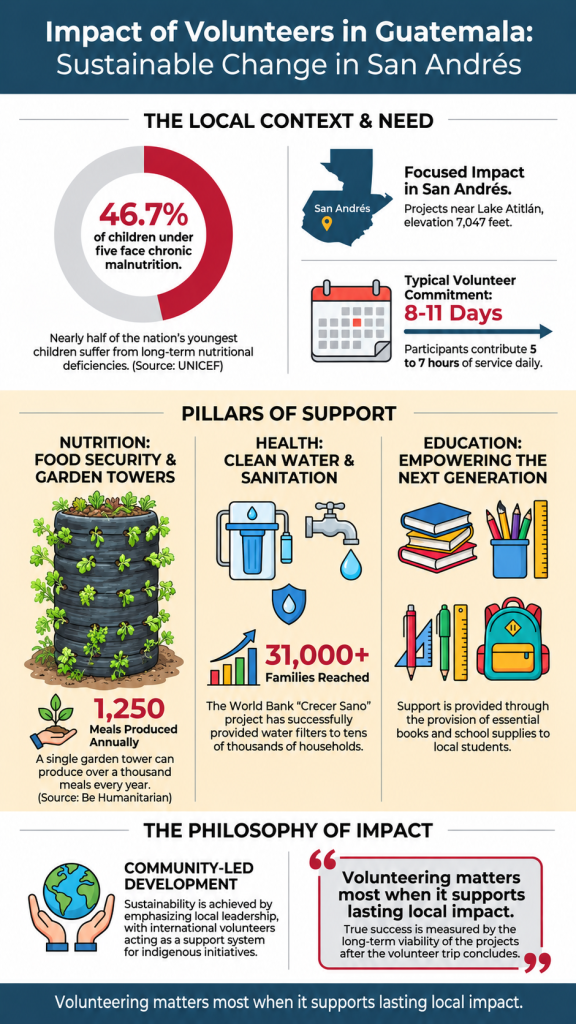
Community-led development puts local people in charge of decisions about their own communities.
That means volunteers don’t arrive with a list of things they think Guatemala needs. Instead, they support projects that local families and teams already understand.
This can make the volunteer role more focused. A local team knows which households need support, which teachers need extra help, and what resources can be used after volunteers return home.
So the visitor brings time and energy. Local people bring knowledge of the community.
Research from BMJ Paediatrics Open shows
“47 cases of child malnutrition were identified. After the intervention, 20% of children reached normal nutritional status, and 47% showed improvement in growth indicators” . The researchers concluded that “the role of community health promoters proved decisive: their belonging to the community built trust and allowed for consistent family follow-up, ensuring the sustainability of caregiving practices. This represents an effective and replicable strategy for vulnerable rural communities” – BMJ Paediatrics Open
That balance is precisely why Guatemala volunteer impact matters. A project has more value when the work doesn’t end with the volunteer trip, a garden can continue growing, and a water filter can keep being used. School materials can stay with pupils and teachers.
None of this means every project will produce a major change. Short-term volunteering has limits. But it can still add something useful when it fits into local plans.
What Does A Typical Guatemala Volunteer Day Look Like?
When you choose to travel with us for a volunteer vacation in Guatemala, a typical day can include several different activities depending on the project and the needs of the local team.
You might spend the morning helping with a household project or carrying supplies to a rural community. Later, there could be time for an English class, gardening, food support, or activities with children.
Most volunteers spend around five to seven hours a day doing service work.
After that, there’s usually time to rest and have dinner.
The schedule isn’t only about work, though. Volunteers may spend time talking with local families and learning about daily life around San Andrés and Lake Atitlán.
That personal side can be one of the most memorable parts of the trip. It also helps volunteers see the people behind the project rather than viewing the community through a list of needs.
How Can Volunteers Make Their Contribution More Useful?

Good intentions aren’t enough on their own. Practice ethical guatemala volunteering by listening, following local guidance, and respecting the role of community members.
A useful volunteer should:
- Follow the local team’s guidance
- Respect family privacy
- Stay within their skills
- Learn before giving advice
- Support existing projects
- Keep expectations realistic
And don’t assume every problem needs your solution.
Volunteers can also prepare by learning about Guatemala before travelling. Understanding local customs, basic Spanish phrases, and the purpose of the project can make it easier to work with families and local staff.
The same applies after the trip. Volunteers can amplify their volunteer vacation impact in Guatemala by staying involved, sharing information about the project, supporting future community work, or helping raise funds through responsible channels.
Is Guatemala Volunteering Worth It?
Credits: Be Humanitarian
Guatemala volunteering can be worthwhile when the work responds to local needs and gives communities a clear role in deciding what happens.
The impact may not always look dramatic. Sometimes it’s a water filter. Sometimes it’s school supplies. Other times, it’s helping with a garden or spending an afternoon with children.
That’s not the whole story, though.
The stronger question isn’t, “How much can I do in one week?” It’s, “How can my time support work that will continue after I leave?”
For people considering a trip with Be Humanitarian, that means looking beyond the travel experience itself. Learn about the project, understand your role, and ask how local teams will use the work after volunteers return home.
A good volunteer trip should leave more than memories behind.
FAQ
What Should I Look For When Comparing Guatemala Volunteer Opportunities?
Look for programs with clear goals, strong local partnerships, and defined volunteer roles. Good Guatemala volunteer opportunities should explain where your time goes, who leads the work, and how communities stay involved. Ask whether the program measures results and supports local staff. This helps you choose meaningful volunteer work in Guatemala instead of a trip focused mainly on tourism.
How Can I Prepare Before Volunteering In Guatemala?
Before volunteering in Guatemala, learn about local customs, basic Spanish phrases, and the community you will visit. Check which skills the role requires and which expenses you should expect. Read independent reviews when possible, and ask how volunteers receive training. Good preparation helps international volunteers avoid assumptions and build respectful relationships with local communities during their stay.
What Skills Are Useful For Volunteer Work In Guatemala?
Useful skills depend on the project. Teaching, construction, gardening, translation, administration, fundraising, and digital skills can support volunteer initiatives. However, skills-based volunteering works best when communities actually need those skills. If you have professional training, ask about suitable roles before arriving. This approach allows you to contribute confidently without taking responsibilities away from qualified local workers.
How Can I Support Guatemala Communities After Volunteering?
Your support does not have to end when your trip does. You can share accurate information, support trusted fundraising efforts, or stay connected with organizations working on community projects. Some volunteers can also use their professional skills remotely. Long-term support can be more useful than occasional attention, especially when it strengthens local partnerships and helps community-led work continue between volunteer visits.
How Can I Tell If Volunteering In Guatemala Is Ethical?
Look for responsible volunteering practices that respect local decisions, protect people’s privacy, and avoid treating poverty as a tourist attraction. Ethical volunteering in Guatemala should explain how organizations work with communities and manage volunteer contributions. Be cautious when programs promise dramatic results from short visits. Strong projects focus on local needs, realistic goals, qualified supervision, and lasting community benefits.
Ready To Volunteer In Guatemala?
Volunteering in Guatemala can help families and local teams with practical needs like nutrition, education, household health, water access, and community projects. But there are limits. You can’t fix chronic malnutrition in a week, replace trained teachers, or provide medical care without the right skills.
What matters is supporting local teams instead of arriving with your own plan. Your time and skills can still make a real difference when they’re needed. If you’re ready to learn more, explore volunteering in Guatemala and see what the experience could look like.
References
- https://pubmed.ncbi.nlm.nih.gov/27802369/#1
- https://bmjpaedsopen.bmj.com/content/10/Suppl_3/A33.5