
Helping in Guatemala should help local people first. That sounds obvious, but not every volunteer trip works that way.
Near Lake Atitlán, many families still deal with hard choices every day. Some parents struggle to pay for school notebooks, food, or doctor visits. In smaller villages, help does not always reach everyone. Ethical volunteer programs try to support families without taking over their community.
The difference shows up in small ways.
A local teacher still leads the classroom. A parent still makes decisions for their family. A volunteer joins the work instead of acting in charge.
For travelers, the experience feels more real too. People spend time talking with families, walking through local markets, and hearing what daily life is actually like in Central America. Some volunteers stay connected long after the trip ends.
That kind of support lasts longer than a photo or a short visit.
Why Ethical Volunteering In Guatemala Matters
- Ethical volunteering supports local families and leaders
- Long term projects near Lake Atitlán help children through food and education programs
- Volunteer trips with Be Humanitarian connect visitors with real community work
What Is The Difference Between Ethical Volunteering And Voluntourism?
Ethical volunteering puts the community first. Voluntourism often puts the visitor first.
A lot of people travel to Guatemala City, La Antigua, or Lake Atitlán because they want to help. Most mean well. Still, some volunteer trips are built more around exciting travel experiences than long term support.
People talk about this online often. Videos and travel posts sometimes show volunteers arriving for only a few days, taking photos with children, then leaving. Local families may never see them again.
That is part of the reason more people now ask questions about ethical volunteering.
Research from Illinois State University Research Repository shows
“Since its rise in the late nineties and early aughts, voluntourism has drawn the attention of academic and non-academic audiences alike, who have warned of the perils of exploitation, commodification, and white saviorism, the perils of voluntourism, the exploitation and commodification of locals and volunteers, the creation of economic dependency between the developing and developed worlds, and social media-fueled white saviorism, spark the same sense of contempt, while participants, including the outwardly politically conscious volunteers, aspire to create a voluntourism environment that fosters cultural mutuality and hybridization, the presence of foreign volunteers [without structural ethical practices] perpetuates an underlying cultural hierarchy of giver/receiver.” – Illinois State University Research Repository
Be Humanitarian works differently. Their programs in San Andrés, near Lake Atitlán, are built around local relationships that already existed before volunteers arrived. Families and community leaders stay involved in the decisions. Volunteers help with programs already running in the community.
That changes things.
| Ethical Volunteering | Voluntourism |
| Community led | Outsider led |
| Long term partnerships | Short term experiences |
| Supports local systems | Focuses on visitor activities |
| Skills matched carefully | “Anyone can help” messaging |
| Protects local jobs | May replace paid workers |
| Accountability and follow through | Minimal transparency |
Ethical programs also avoid things like orphanage tourism and disrespectful cultural activities. For many volunteers, the trip starts feeling different after a few days. Less like tourism. More like being invited into someone’s normal life.
Why Do Locally Led Projects Create Better Outcomes In Guatemala?
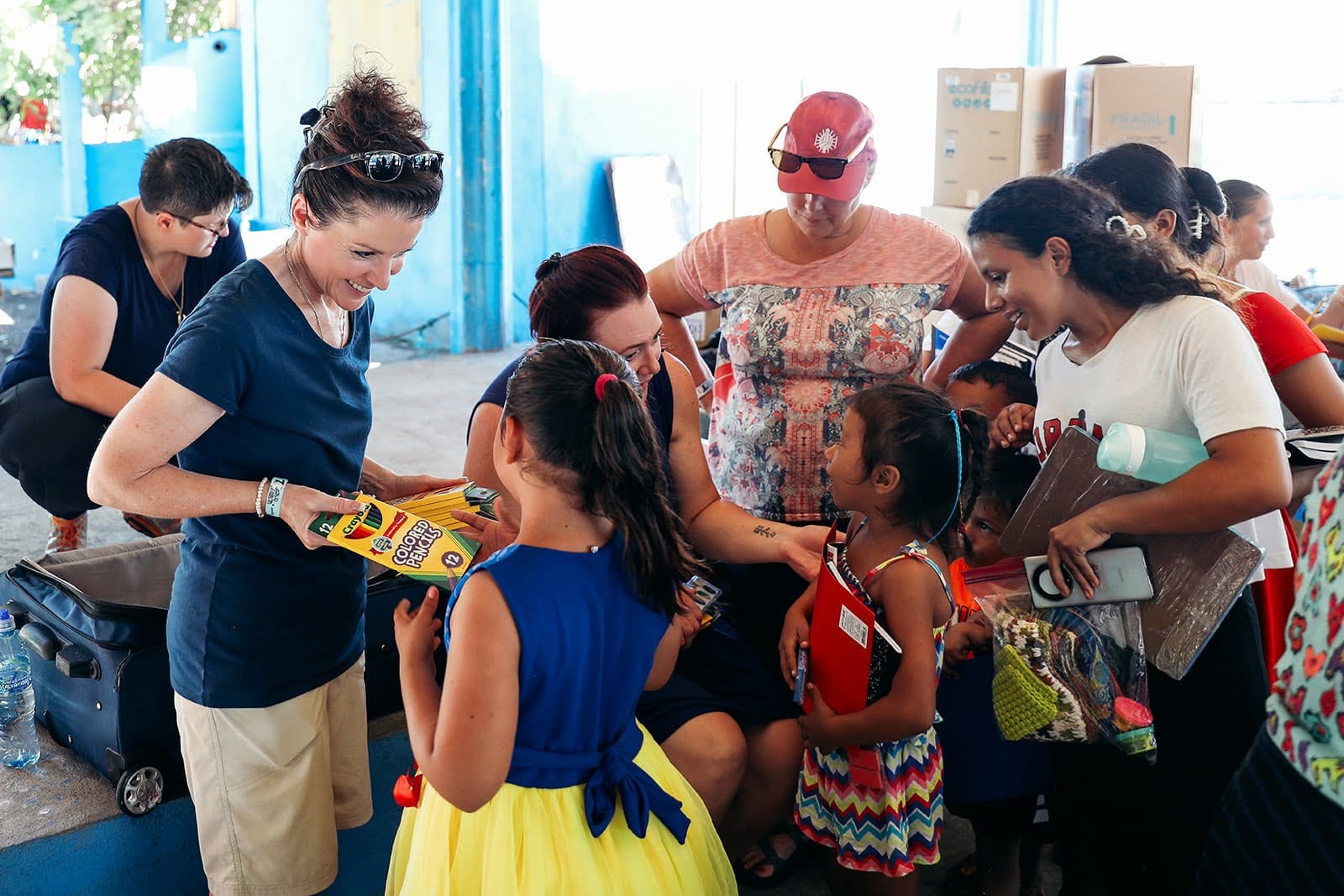 Locally led projects usually work better because local families already know what their community needs.
In small Maya communities near Lake Atitlán, trust matters. People want to know who is coming into their town and why. Relationships grow slowly there.
Ethical volunteering respects that.
In San Andrés, mornings start early. Market stands open. Tuk tuks move through the streets. Children walk to school carrying backpacks while shop owners sweep the sidewalks outside their stores.
Volunteers slowly become part of that routine. Some people first discover these community programs when they decide to travel with us and experience daily life near Lake Atitlán alongside local families.
Some older volunteers need a little time to adjust because San Andrés sits at 7,047 ft (2,148 m). Walking uphill can leave people out of breath during the first few days. Local guides and nearby clinics help volunteers stay safe during the trip.
Most days with Be Humanitarian last around 5 to 7 hours. One morning may involve helping with water filters or sitting in an English class connected to the Ministry of Education. Later in the day, volunteers may help in gardens or play soccer with children after school.
The important thing is that local leaders still guide the work.
Insights from Global Health Action indicate
“El Triunfo’s case shows that for a participatory scheme to be successful it needs prolonged engagement, continued support, and successful experiences that can help to provide the kind of stable participatory practices that involves community members in a process of empowered decision-making and policy implementation, when communities are involved, the projects are more successful and tend to be more sustainable.” – Global Health Action
- School programs help children stay in class
- Nutrition programs support family health
- Women led businesses create local income
- Community centers support outreach and learning
Most volunteers remember the simple moments most clearly. Sharing meals with families, walking through local markets, and spending time with children can genuinely feed your soul with joy in ways many travelers do not expect.
Eating dinner with a host family. Hearing music from a nearby street. Watching children laugh during soccer games beside the school.
Those moments stay with people because they feel honest.
Indigenous people make up about 44% of Guatemala’s population based on national estimates. That is one reason cultural respect matters so much in volunteer work connected to Indigenous communities.
Unlike large volunteer companies, Be Humanitarian trips are guided by Tobie Spears and a local Guatemalan team with long relationships in the region. People know each other there. That creates more trust over time.
How Can Unethical Volunteering Harm Local Communities?
 Even when people have good intentions, unethical volunteering can still hurt local communities.
One problem is job replacement. Some volunteer programs bring outsiders to do jobs local workers could already do if the community had better funding. Over time, that can weaken local jobs instead of helping them.
Around Lake Atitlán, more people now openly criticize volunteer trips built around selfies and emotional stories. Some programs create powerful memories for travelers but leave very little behind for local families.
Children can also be affected.
Experts often warn against short orphanage visits because children may grow attached to volunteers who leave only days later. That cycle can become emotionally difficult for children over time.
Ethical volunteer programs focus more on helping families stay together through education, nutrition, and community support.
Common Red Flags In Guatemala Volunteer Programs
| Red Flag | Why It Matters |
| No local leadership | Outsider priorities dominate |
| Short orphanage visits | Emotional instability for children |
| No transparency | Hard to measure outcomes |
| “No skills needed” teaching roles | Skill mismatch risks |
| Foreign owned work exchanges | Can undercut local jobs |
Guatemala also faces serious nutrition problems. That is not something a short trip can fix.
Ethical programs focus more on long term support.
- Volunteers support education programs already in place
- Nutrition programs help families stay healthy
- Gardening projects improve food access
- Child sponsorship helps children stay in school
The goal is not rescuing people.
The goal is helping communities continue the work they already started.
Why Does Long Term Support Matter More Than One Time Trips?
 Long term support matters because families need steady help, not quick visits that end after a few days.
A one week trip can create good memories. Real change takes years.
In San Andrés, trust has grown over time. Families know returning volunteers by name. Children remember soccer games from past visits. Some sponsors stay connected with families long after they return home.
That steady connection matters in school and food programs.
- Sponsorship donations help children stay in school
- Community projects support long term outreach
- Nutrition programs help children learn and stay healthy
- Women led businesses create local jobs and income
Many volunteers arrive thinking they will only give help. Many leave feeling changed by the people they meet and the lessons they learn.
Be Humanitarian trips follow that long term approach. Most trips last about 8 to 11 days. Volunteers spend time helping in the community while also learning about local culture and daily life. Some groups visit Antigua Guatemala, a UNESCO World Heritage Site, before returning to projects near Lake Atitlán.
The days are active and full. A volunteer may help in English classes during the morning, install water filters in the afternoon, then share dinner with local families at night. The work can feel tiring, but many volunteers say those are the moments they remember most.
That same idea shapes ethical child sponsorship programs in Guatemala. Sponsorship becomes an ongoing relationship, not a one time gift.
What Should Volunteers Know Before Going To Guatemala?
Credits: Be Humanitarian
Volunteers should prepare emotionally, learn basic Spanish, and come ready to listen and learn from local communities.
Life in Central America may feel very different from daily life in North America. Around Lake Atitlán, tuk tuks move through narrow roads while women sell woven textiles in busy markets. Children play soccer near schools. Roosters wake people up before sunrise.
Preparation helps volunteers enter that space with respect.
More than 90% of people in Guatemala speak Spanish along with over 20 Mayan languages. Even a few simple Spanish phrases can help build trust and connection with families.
Preparation Checklist
- Learn simple Spanish phrases before the trip
- Read about Guatemalan history and Indigenous culture
- Understand community led volunteer work
- Prepare for the 7,047 ft elevation
- Bring walking shoes and layers for changing weather
- Be ready to listen more than speak
Some retirees and older travelers worry they may be too old for volunteer trips abroad. Many discover that ethical volunteer vacations offer a slower, more meaningful way to experience Guatemala while supporting local communities. In reality, Be Humanitarian has welcomed volunteers over 70 years old. Good preparation and guided support make a big difference.
The guided structure also helps volunteers feel safer during the trip. Tobie Spears and local staff lead the experience and know the area well. Volunteers are not expected to navigate villages or projects on their own.
For many people, the biggest preparation is emotional. Ethical volunteering asks people to slow down, pay attention, and build relationships instead of searching for dramatic experiences.
How Does Ethical Volunteering Transform Volunteers Too?
Ethical volunteering changes volunteers through real relationships, shared experiences, and time spent with local families and communities.
Many retired professionals arrive with years of experience in education, healthcare, business, or leadership. Entrepreneurs often arrive thinking about ways to help communities grow. Other travelers come because they want to learn more about life in Guatemala.
Then the small moments begin to matter most.
A volunteer helps children practice English at school. Later that day, the same volunteer joins a soccer game outside the classroom while parents watch nearby. Another night ends with stories shared around a dinner table inside a family home near Lake Atitlán.
Those memories stay with people for a long time.
- Better understanding of life in other countries
- Long term involvement in child sponsorship
- More thoughtful travel habits
- Continued support for Guatemala communities
Many volunteers stay involved after the trip ends. What begins as volunteer work often grows into real friendship through service with families and local leaders in Guatemala. Some sponsor children.
Others support nutrition or education programs. Some business owners even become long term sponsors for community projects helping women and children in Guatemala.
The relationship works both ways. Volunteers learn patience, gratitude, and perspective while communities receive ongoing support and partnership.
That difference is what separates ethical volunteering from performative volunteer tourism.
FAQ
How does volunteer work help families in Guatemala?
Ethical volunteer work helps families in Guatemala by supporting long-term community goals instead of short visits with little impact. In parts of Central America such as Guatemala City and Lake Atitlán, many families need better water systems, medical clinics, and stronger public schools.
Ethical volunteering programs work with local leaders to improve daily life through community development projects that match the real needs of each village and neighborhood.
Why do ethical volunteering programs matter in Guatemala?
Ethical volunteering programs matter because they create mutual relationships between volunteers and local communities. Many volunteer abroad groups support community service projects involving animal care, sustainable farming, public health infrastructure, and social work.
In places like La Antigua and Santiago Atitlán, volunteers often assist with dental hygiene programs, medical relief efforts, and educational support. Responsible service trips also respect local culture and protect local jobs and traditions.
What should volunteers learn before service trips begin?
Before joining service trips in Guatemala, volunteers should study the local culture, social issues, and community needs. Learning basic Spanish lessons helps volunteers communicate respectfully with local homestay family members and community leaders.
Volunteers should also understand poverty rates, chronic malnutrition, and public health challenges in rural areas. Pre-departure advice and ethical reflection help volunteers avoid performative action and focus on meaningful change that benefits local communities.
What places do volunteers often visit in Guatemala?
Many volunteering programs in Guatemala include visits to Lake Atitlán, Guatemala City, and La Antigua. Volunteers may also visit landmarks such as the Santa Catalina Arch, Filadelfia Coffee Plantation, and nearby volcanoes like Pacaya Volcano and Acatenango volcano.
Some humanitarian projects take place in villages near the Mexican border. These regions offer beautiful natural landscapes, Guatemalan markets, ancient cities, and strong Indigenous cultural traditions that volunteers can respectfully experience.
How can volunteer placement create meaningful change?
A strong volunteer placement connects volunteers with projects that directly support community needs. Volunteers may help with public schools, soup kitchen programs, sea turtle conservation, medical outreach trip services, or community outreach activities.
Some humanitarian projects also improve water systems, support telemedical patient consultations, and strengthen sustainable systems in rural villages. Ethical Volunteer Tourism creates meaningful change by listening to local communities and supporting long-term development goals for families and children.
Why Ethical Volunteering Creates Real Change
You want to help, but real change takes more than one quick trip. In Guatemala, families near Lake Atitlán are already working hard to build better lives. Ethical volunteering means standing with them, not trying to save them. Kids get help in school. Families grow stronger. Real friendships happen. That’s what makes it matter.
Good volunteer work feels personal because it is. You see real progress, real smiles, and real connection. Be Humanitarian helps people support communities with care and respect, one step at a time. Ready to help in a real way? Visit ethical volunteering in Guatemala
References
- https://ir.library.illinoisstate.edu/cgi/viewcontent.cgi?article=2287&context=etd
- https://www.tandfonline.com/doi/full/10.3402/gha.v4i0.6412
Related Articles
- https://behumanitarian.org/three-ways-to-feed-your-soul-with-joy/
- https://behumanitarian.org/blog/ethical-volunteer-vacations-in-guatemala/
- https://behumanitarian.org/building-lasting-bonds-the-power-of-friendship-through-service/