
Child sponsorship can help children stay in school and build better job options later in life. One 2013 study in the Journal of Political Economy found that sponsorship increased secondary school completion by 11.6 to 16.5 percentage points across six countries, including Guatemala. That’s more than a monthly donation.
For Be Humanitarian, sponsorship also supports education, food, English classes, nutrition programs, and local projects in San Andrés near Lake Atitlán. But long-term support matters most. It can give children steady help as they grow, while volunteer travel can support local work when done responsibly.
Keep reading to see what sponsorship can change.
Benefits Of Long-Term Sponsorship
- Long-term sponsorship can support education, nutrition, health, and basic needs while reducing financial pressure on families.
- Shared funding can benefit entire communities through schools, water projects, gardens, sanitation, and other local resources.
- Donors should review funding models, measurable outcomes, community involvement, and transparent reporting before choosing a sponsorship programme.
Child Sponsorship And Community Support
Child sponsorship can help children stay in school while also helping with food, health, clean water, and other basic needs. But the money matters most when it supports local programs that keep going over time.
At Be Humanitarian, sponsorship helps provide school supplies, food, and English classes. The group also runs nutrition programs that serve thousands of meals each month. Children can also receive things like backpacks and other school supplies.
And the help doesn’t stop at school. Some community projects provide water filters, vertical gardens, wood-burning stoves, and other useful items for families. These projects can help with problems that affect daily life at home.
For families in rural Guatemala, school can be hard to prioritize when basic needs aren’t covered. A child may need to help at home or a family may have trouble paying for food and school supplies. So steady for sponsorship donations.
Funding may support:
- Education: School supplies, uniforms, backpacks, and English classes.
- Nutrition: Meals, food support, seeds, and garden beds.
- Health And Sanitation: Water filters, sanitation projects, and health education.
- Family Support: Help with children’s basic needs.
- Community Development: Local workers, infrastructure, and home projects.
The idea goes beyond sending money to one child. It’s about helping children, families, and their communities deal with everyday needs. That matters because lasting change usually takes more than one donation.
Where Does Sponsorship Money Actually Go?
Pooled sponsorship funding can pay for shared services and community projects. So the money doesn’t always go directly to one child. It may support things that help many children and families at the same time.
This difference matters because sponsorship groups use different funding models. Some direct more support toward individual children, while others use sponsorship funds for projects that help the wider community.
That can mean support for schools, clean water, health services, or other local needs. The exact approach depends on the organization and how its sponsorship program is set up. In other words, sponsorship isn’t always a direct payment. The money can support the wider community, too.
| Funding approach | Potential role | What donors should understand |
| Individual support | Child-specific education and development | Funding may support a wider program |
| Pooled funding | Schools, nutrition, water, and community programs | Benefits can extend beyond one child |
| Community infrastructure | Shared long-term resources | Impact may reach many households |
Be Humanitarian’s community-centered approach in Guatemala fits the broader idea that children live within families, schools, and neighborhoods. A water filter, garden, or school resource can therefore influence more than the sponsored child alone.
That said, donors should expect clear explanations of how funding works. Transparency builds trust when organizations explain what sponsorship supports, how projects are selected, and how community members participate.
Does Child Sponsorship Improve Educational Outcomes?
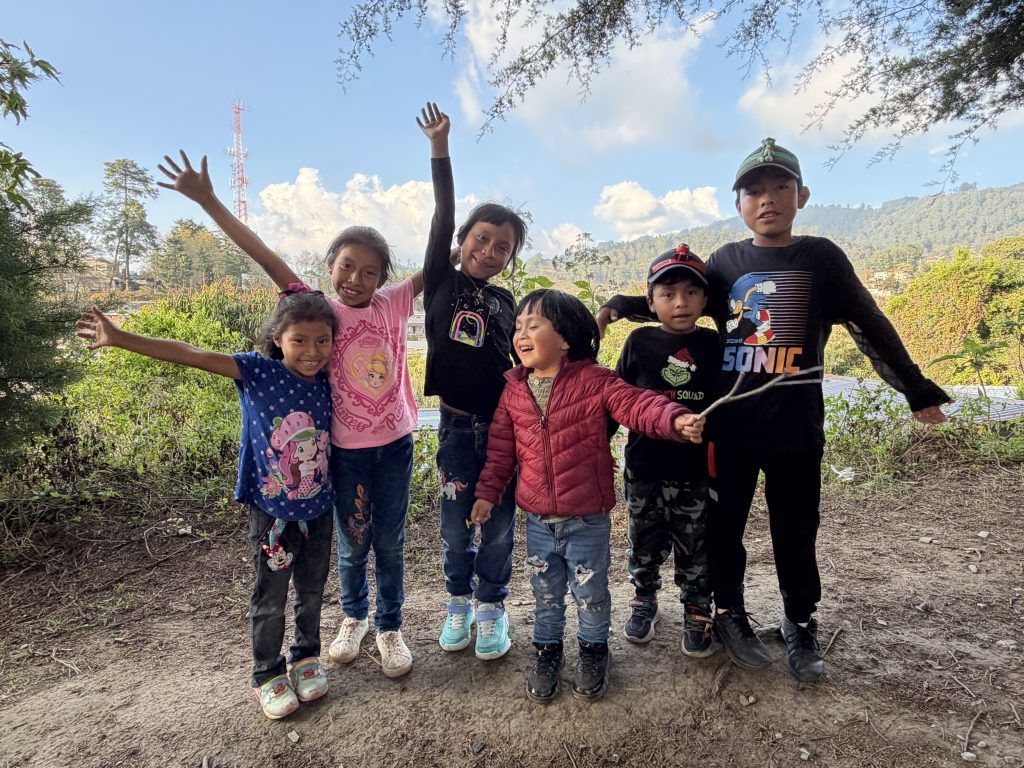
Research suggests that long-term sponsorship can help children stay in school longer and complete more years of education. Some of the largest gains were seen in secondary school.
Research from Journal of Political Economy shows
“These impacts are due, in part, to increases in children’s aspirations” – Journal of Political Economy
The Journal of Political Economy study looked at 10,144 people in Bolivia, Guatemala, India, Kenya, the Philippines, and Uganda. Researchers found primary school completion rose by 4.0-7.7 percentage points. For secondary school, the increase was 11.6-16.5 percentage points.
The study also found that sponsorship led to about 1.03-1.46 more years of completed schooling, compared with a baseline of 10.19 years. Those numbers show why education support can matter long after a child gets a backpack or takes an English class.
Reported outcomes include:
- 4.0-7.7 percentage points higher primary school completion.
- 11.6-16.5 percentage points higher secondary school completion.
- 2.1-2.4 percentage points higher university completion.
- About 1.03-1.46 additional years of completed schooling.
The study included Guatemala, but its findings shouldn’t be treated as a direct evaluation of Be Humanitarian. Different programs use different types of support and funding.
That difference matters. The research shows what sponsorship achieved in the programs studied. It doesn’t mean every sponsorship program will get the same results.
Can Sponsorship Funding Affect Adult Economic Outcomes?
Child sponsorship can have effects that last into adulthood, especially through education, job opportunities, and higher goals. The six-country study found a 5.1-6.3 percentage-point increase in the chance of salaried employment and a 6.5-6.7 percentage-point increase in white-collar employment.
In a recent analysis by World Development
“a positive causal impact of child sponsorship on self-esteem, optimism, and aspirations” and “the substantial effects of child sponsorship on outcomes in adulthood are at least partially mediated by these programs’ development of socio-emotional skills.” – World Development
| Adult Outcome | Reported Effect |
| Salaried employment | +5.1 to +6.3 percentage points |
| White-collar employment | +6.5 to +6.7 percentage points |
| Community and church leadership | Modest positive evidence |
The researchers also found that sponsored children had higher expectations for education and future jobs. That matters because education isn’t only about finishing school. It can also shape how young people think about work, training, and their future income.
For a sponsor, the point is clear. Helping a child stay in school may affect their opportunities years later, although each person’s outcome will be different.
How Can Sponsorship Funding Improve Health and Nutrition?
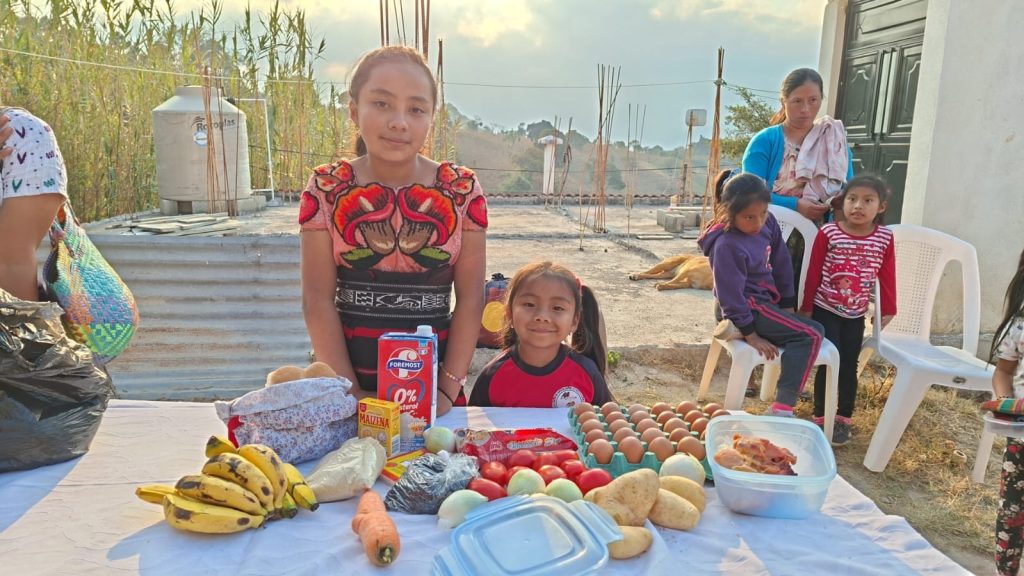
Integrated programs can bring food, nutrition lessons, clean water, sanitation, and home gardens into the same effort. That means children can get help with more than one part of daily health.
Be Humanitarian reports that its nutrition program provides thousands of meals each month. Families may also get vegetable seeds and vertical gardens.
These projects can help in different ways:
- Meals can meet basic nutrition needs.
- Nutrition lessons can help families use food better.
- Gardens can help families grow food at home.
- Water filters can provide safer drinking water.
- Sanitation projects can improve health at home.
The supplied research dossier also cites a 34% drop in under-five stunting from a World Vision program and 89% clean-water coverage in target community schools. Those figures show what these programs can measure, but they shouldn’t be called Be Humanitarian results.
That difference is important. Sponsorship writing should keep research findings separate from an organization’s own results. It also shouldn’t use another nonprofit’s numbers to make promises about Guatemala.
Why Does Community Funding Matter Beyond One Child?
Shared funding can address problems that affect many children at once. So community-led work can be an important part of long-term sponsorship.
A school with better water access can help many students. A garden can help a family grow food beyond one meal. Better sanitation can improve health at home. Local contractors can also keep project spending within the community.
The pathway often looks like this:
- Water projects → better household or school access.
- Gardening → more chances to grow food at home.
- Education support → better access to learning.
- Nutrition programs → regular food support for children.
- Local participation → projects shaped by community needs.
Be Humanitarian says its work supports existing community needs rather than asking volunteers to run local systems. That difference matters for responsible service travel and understanding the role of Guatemala.
Volunteers can bring time, skills, and energy, while local families and teams stay involved in decisions. People interested in taking part can travel with us and contribute through organized volunteer activities alongside the local team, creating a meaningful volunteer vacation impact through hands-on community work.
Of course, community funding can make individual impact harder to see. A sponsor may know a child’s name but see the wider impact through schools, families, gardens, nutrition programs, or water projects. Good communication can make that link easier to understand.
Why Are Some Donors Skeptical About Child Sponsorship?
Donors often worry about where their money goes, admin costs, sponsorship endings, and emotional fundraising. Good organizations should address these concerns openly.
People often ask whether sponsorship money reaches one child or supports wider community programs. Other concerns include sudden sponsorship endings, repeated fundraising requests, and stories that show children without enough context.
| Concern | What Donors Should Look For |
| “Does the money reach the child?” | A clear explanation of the funding model |
| Administrative costs | Transparent organizational information |
| Sponsorship ends | Honest communication about transitions |
| Recurring contributions | Clear and predictable commitments |
| Emotional marketing | Respectful, family-centered storytelling |
| One-to-one expectations | Clear explanation of community funding |
Results from one sponsorship program may not apply to every organization. Keep that in mind when reviewing claims about child sponsorship.
For Be Humanitarian, the stronger message isn’t that every dollar creates the same result. It’s that sponsorship provides steady support for children while also helping programs that serve families and communities.
How Should Organizations Measure Sponsorship Impact?
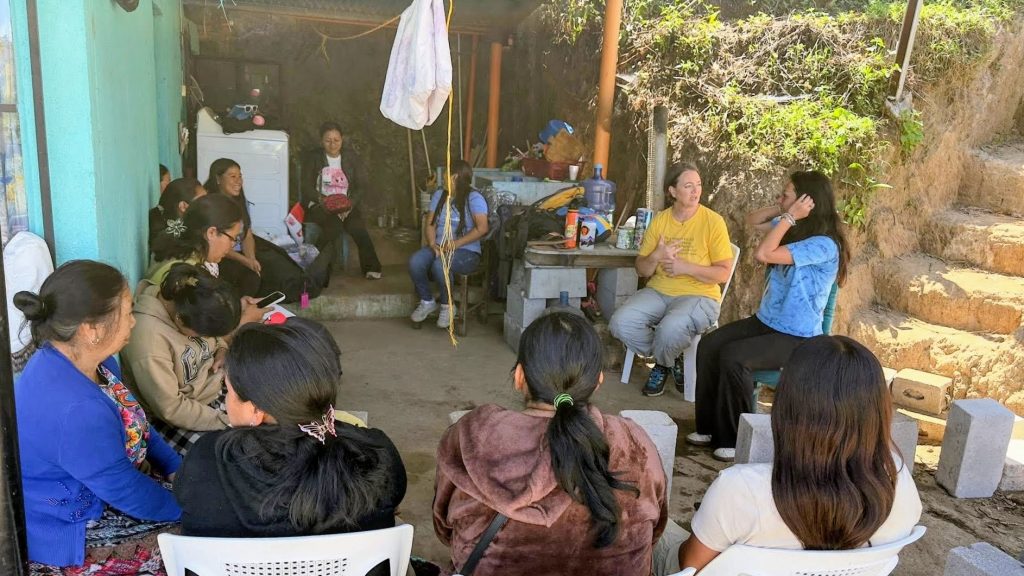
Good sponsorship research should look at school, health, food, income, and community results. Photos, letters, and personal stories can help, but they can’t tell the whole story.
The study followed 10,144 people across six countries over many years. This made it possible to look at how childhood sponsorship affected education and work later in life.
A practical measurement framework includes:
- School enrollment and attendance.
- Primary and secondary school completion.
- Higher education participation.
- Nutrition and health indicators.
- Water and sanitation access.
- Employment and vocational outcomes.
- Household economic indicators.
- Community participation.
- Long-term child wellbeing.
For Be Humanitarian, seeing the work can also help donors understand their support. A garden being built, a water filter being installed, or a classroom getting support gives donors something they can see.
But finishing a project doesn’t prove it helped. Installing something shows what was done. Measuring whether it improved daily life shows what changed.
How Can Sponsorship Avoid “Poverty Porn”?
Ethical sponsorship stories should show dignity, choice, family involvement, and progress. Children shouldn’t be shown as helpless people who need saving.
The words matter. Families should be shown as partners. Children can be students, teammates, friends, learners, and part of their community, not only examples of hardship.
| Use | Avoid |
| Family and community voices | Exploitative imagery |
| Long-term progress | Rescuer narratives |
| Specific outcomes | Simplistic poverty messaging |
| Local leadership | Portraying children only as beneficiaries |
| Community context | “Saving” or “rescuing” language |
Be Humanitarian’s volunteer model can support this approach through direct community work. A volunteer might spend the morning helping distribute water filters, join an English class, then play soccer with children later.
That gives a different picture from passive tourism. A typical service day is active and planned, with about 5-7 hours of volunteering before dinner and personal time. The goal isn’t to put visitors at the center. It’s to create sustainable volunteer impact through work that already supports community needs.
Is Child Sponsorship More Effective Than Other Interventions?
There isn’t one program that works best for everyone. Results can change based on what the program is trying to do, who it helps, how it’s run, and how much it costs.
Researchers also compare child sponsorship with things like cash transfers, deworming, school supplies, and infrastructure projects. These comparisons can be useful, but they don’t all measure the same thing.
| Approach | Key Evaluation Question |
| Child sponsorship | What long-term outcomes improve? |
| Cash transfers | Would flexible household support work better? |
| Deworming | Can a low-cost health program improve attendance? |
| Educational supplies | Do materials improve learning or school completion? |
| Infrastructure | How widely do shared projects help families? |
The program showed strong results in education and employment. However, those results may not be the same for every child sponsorship program.
That point is useful for donors. Look at what each program does and how it measures results. The word “sponsorship” alone can’t tell you what the outcome will be.
How Can Be Humanitarian Demonstrate Sponsorship Impact?
Credit: Be Humanitarian
Be Humanitarian can show sponsorship impact by linking funding, community work, project activity, and long-term results.
A useful framework is:
- Explain funding: Show what sponsorship supports, from education and food to English classes, nutrition, and community projects.
- Show participation: Feature families, teachers, local teams, and community members as active partners.
- Document projects: Share examples such as water filters, gardens, sanitation work, and school resources.
- Measure outcomes: Track education, nutrition, health, and other useful measures.
- Follow progress: Show how support changes over time, not only in one update.
- Connect volunteer travel: Let visitors see projects while taking part in useful work.
This is where sponsorship and volunteer travel can meet.
Be Humanitarian’s Volunteer Vacations take place across primary project communities near Lake Atitlán (such as San Andrés), while itineraries also incorporate cultural destinations including Antigua, Panajachel, and coastal areas depending on the selected trip.
Trips last about 8-11 days and are led by Tobie Spears and the local team. A day may include water filter work, English classes, gardening, soccer, and time with families, showing how volunteer impact matters when visitors take part in existing community work. Volunteers can relax after dinner and enjoy the Lake Atitlán area.
Elevations around Lake Atitlán and the Guatemalan highlands generally range between 5,000 and 7,000+ feet (1,500-2,150+ meters). Older travelers and people with heart or breathing conditions should talk with a medical professional before going.
Volunteers over 70 have taken part. Fitness and health needs matter more than age alone. Antigua may be a one-day visit, but it isn’t the work site.
What Should Donors Look for Before Sponsoring a Child?
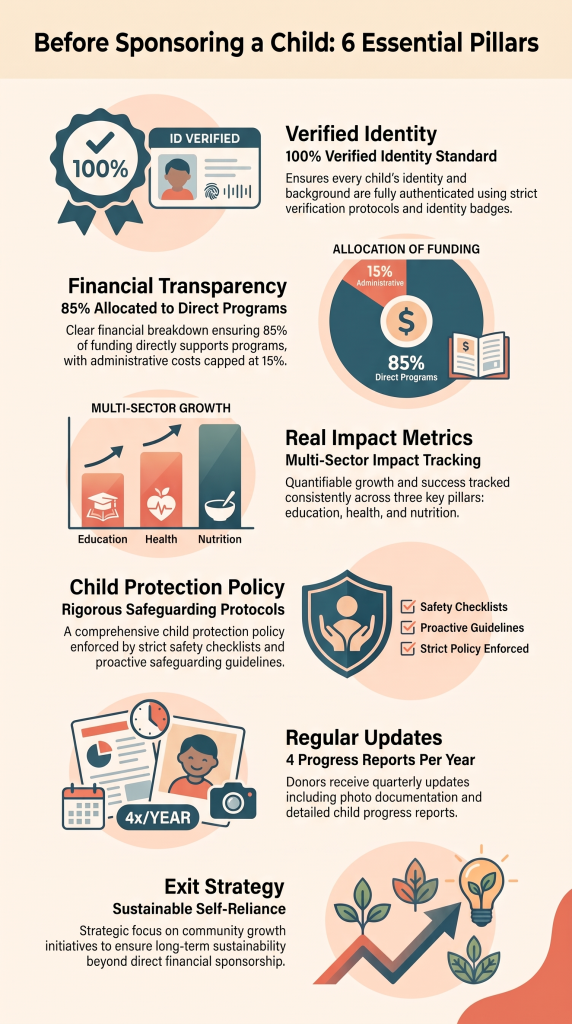
Before choosing a sponsorship program, donors should look at how the money is used, how local people are involved, and how results are shared over time.
A practical checklist can help:
- Is the sponsorship model easy to understand?
- Does funding support one child, a wider program, or both?
- Are community projects explained honestly?
- Are results measured beyond photos and letters?
- Are children and families shown with dignity?
- Do local people help make project decisions?
- Are education and nutrition programs clearly explained?
- Is progress checked over time?
- Can donors see how sponsorship meets wider community needs?
For older professionals, retirees, frequent travelers, and entrepreneurs, giving can be about more than money. Sponsorship can also become a way to connect with Guatemala through responsible travel and service.
Companies can take a similar approach by linking charitable giving with employee involvement. But the community should stay at the center, not the company’s marketing goals. Over time, giving can become a lasting connection.
FAQ
What does child sponsorship funding help children access?
Child sponsorship funding can help children access education, learning materials, healthcare, nutritious food, and clean water. It may also support school attendance, educational support, and child protection programs.
Depending on local needs, child development funding can provide practical help that improves children’s daily lives and gives them better opportunities to learn, stay healthy, and develop.
How can child sponsorship impact children beyond education?
The impact of child sponsorship can extend beyond education into health, nutrition, family support, and child protection. Child sponsorship outcomes may include better school attendance, improved health and nutrition, stronger self-esteem, and greater access to social support.
When families receive household economic support or livelihood opportunities, sponsorship funding can also help reduce financial pressures that affect children.
Can sponsorship funding for children benefit whole communities?
Yes. Sponsorship funding for children can support community-based development projects that improve services for many families. Community development funding may help provide clean water projects, school infrastructure, community health initiatives, and water and sanitation access.
These services can benefit both sponsored and unsponsored children, creating community-wide benefits that continue beyond the support provided to individual children.
How can families benefit from child sponsorship programs?
Child sponsorship programs may support families through household economic support, livelihood opportunities, and income generation activities. These forms of support can help families manage essential costs and reduce financial pressure.
When families have more stable incomes, children may have better access to education, healthcare, nutritious food, and learning opportunities, while households gain greater economic stability.
How can donors understand the impact of child sponsorship funding?
Donors can assess the impact of child sponsorship funding by reviewing measurable child outcomes, program accountability, and evidence from sponsorship program evaluation.
Useful measures include school attendance, school completion rates, educational attainment, child health outcomes, healthcare access, and child wellbeing. A development impact assessment can also examine community-wide benefits and progress toward long-term poverty reduction.
What Does The Evidence Say About Child Sponsorship?
Child sponsorship can help improve education, nutrition, health, and economic opportunity. Research on some programs found gains of 11.6 to 16.5 percentage points in secondary school completion, along with better employment outcomes later in life. The evidence matters, but so does how support reaches families.
For Be Humanitarian, that means connecting sponsorship with its work in San Andrés, Guatemala, where children receive educational support and families take part in nutrition and gardening projects. That’s what makes the impact easier to understand.
If you want your support to have a more personal connection, sponsoring a child can be a simple next step. You can also stay involved through ongoing support, a corporate partnership, or a Volunteer Vacation with the local team. Learn More About Be Humanitarian
References
- https://www.journals.uchicago.edu/doi/suppl/10.1086/670138#1
- https://www.sciencedirect.com/science/article/abs/pii/S0305750X20304630#1