
Sustainable Guatemala volunteer impact means helping local communities in ways that last beyond a short trip. Near San Andrés and Lake Atitlán, Be Humanitarian supports projects focused on nutrition, education, clean water, gardening, and family support. But the work isn’t only about what volunteers do during their stay.
It’s also about supporting programs that can keep going after they leave. Real impact takes local needs into account and gives people practical support they can use. That matters. So, what does responsible volunteering look like in Guatemala? Keep reading to see how these projects support families and communities over time, and what your role could be.
Quick Reads: Sustainable Volunteer Impact
- Projects follow local needs.
- Families can keep using useful resources.
- Programs can continue after volunteers leave.
What Does Sustainable Volunteer Impact Mean In Guatemala?
Sustainable volunteer impact means supporting community-led work that can continue after a trip ends. The focus isn’t only on volunteer hours. It’s also about resources, local relationships, and programs that remain useful.
For Be Humanitarian, the work includes early nutrition, education, gardening, water access, and family support. The organization’s programs focus on needs faced by children and families in communities near Lake Atitlán.
Guatemala still faces serious nutrition problems. UNICEF reports that its latest modeled estimate puts moderate or severe stunting among children under 5 at 44%, based on 2022 data.
That figure gives some context. But it doesn’t describe every family or village.
- Local needs guide projects.
- Families can keep useful resources.
- Programs continue between trips.
A volunteer might help with water filters one day, then assist with English activities or gardening. Understanding the real impact Guatemala volunteers make comes down to hands-on service and relationship-building rather than quick photo stops.
How Does Be Humanitarian Approach Sustainable Impact?
Be Humanitarian connects volunteer activities with programs that continue after travelers return home. Its work near Lake Atitlán includes gardening, water filters, school support, nutrition, and family programs.
| Focus | Approach | Intended Outcome |
| Nutrition | Early nutrition programs | Support for child development |
| Gardening | Vertical garden towers | More access to fresh produce |
| Education | Supplies, tuition, and classes | Support for school access |
| Sponsorship | Recurring child support | Continued help for families |
The volunteer visit is only one part of the work. Local teams guide projects, while volunteers help with tasks that fit existing plans.
Current examples include installing household resources, helping at schools, delivering supplies, and working with garden projects. Volunteers may also spend time with sponsored children.
Be Humanitarian says its nutrition program provides thousands of meals each month. That gives recurring food support a place within the wider program.
Still, one number can’t explain everything. Continued family participation and local leadership matter too.
How Can Garden Towers Support Sustainable Food Security?

Garden towers can give families a way to grow fresh food when regular garden space is limited. Volunteers may help install the systems, while families and local teams can keep using them after the trip.
Be Humanitarian describes volunteers working with its garden team to create garden systems for families near Lake Atitlán. The idea is practical. The volunteer helps with the setup, but the family keeps the resource.
In March 2026, Be Humanitarian reported a greenhouse project involving 5 volunteers and 10 local women. The greenhouse is intended to grow plant starts for future garden towers and create a job for a local mother.
That example shows why the work doesn’t have to end when visitors leave.
- Help install garden towers.
- Support local garden teams.
- Keep families involved.
- Use the system afterward.
But a garden tower isn’t a cure for food insecurity. Families still need suitable plants, supplies, time, and support. Those details matter more than the project name.
Why Does Early Nutrition Matter For Long-Term Development?
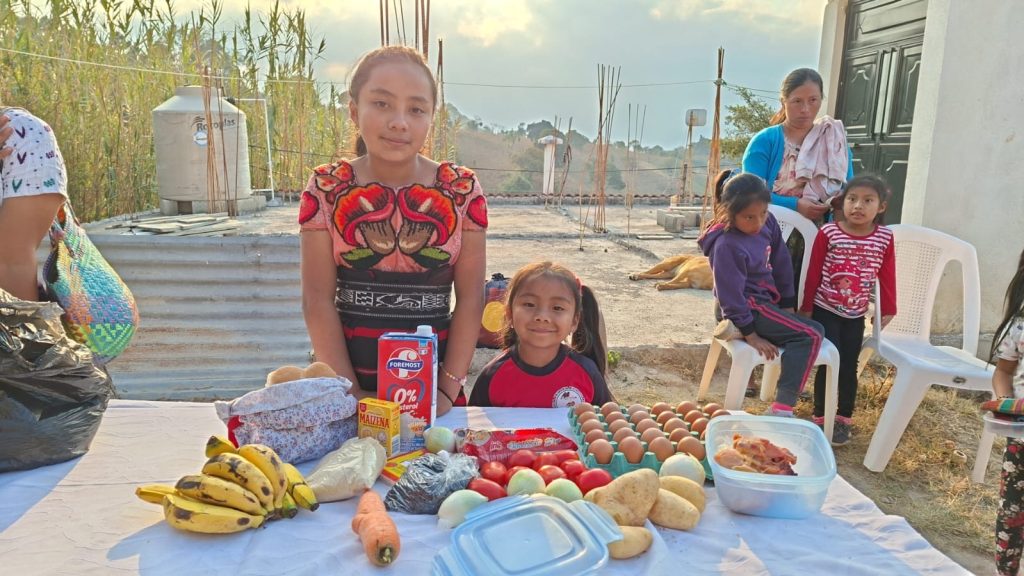
Children need enough food and nutrients for healthy growth. In Guatemala, child nutrition remains a major concern, so recurring food support can form part of wider community programs.
UNICEF estimates that 44% of Guatemalan children under 5 experienced moderate or severe stunting in its latest modeled estimate for 2022.
That’s a national figure. It shouldn’t be treated as a measurement of every community near Lake Atitlán.
Be Humanitarian links nutrition with education and child support in San Andrés. Its materials describe programs for children who face nutrition and schooling barriers.
A service day can include distributing supplies, helping with school activities, or delivering resources to families. Volunteers also spend time with children and local staff.
Then the workday ends.
San Andrés sits at about 7,047 feet (2,148 meters) above sea level. Older travelers, or people with heart or respiratory conditions, should talk with a doctor before traveling at this altitude. Be Humanitarian also describes nearby clinics and local guidance as part of the trip setting.
How Does Education Create Longer-Term Volunteer Impact?
Education support can continue beyond a volunteer visit. School supplies may help with immediate needs, while tuition support and ongoing classes can support children over a longer period.
Be Humanitarian describes support that includes books, backpacks, school supplies, tuition assistance, and educational activities. Local teachers remain responsible for classroom education.
English activities offer another form of support. Volunteers may help children practice conversation while local staff continue the program after the visitors leave.
That difference matters. A donated backpack helps once. A continuing education program can stay useful.
UNICEF also reports ongoing education concerns in Guatemala, including low learning outcomes in areas such as reading and math.
- School supplies reduce some barriers.
- English activities add language practice.
- Tuition support can ease family costs.
- Sponsorship can provide recurring resources.
The social side matters too. Playing soccer after class, sharing a meal, or laughing over a language mistake can build a real connection.
Most volunteers remember those moments.
Can Child Sponsorship Strengthen Sustainable Community Programs?
Setting up a child sponsorship can provide recurring support long after a trip ends, funding food, schooling, and specialized classes like English.
Its current website promotes monthly child sponsorship. Published materials have referenced $40 per month, but that amount should be checked against the current sponsorship page before publication.
A volunteer trip may last 8-11 days. Sponsorship can continue much longer.
Be Humanitarian’s trip information describes guided visits near Lake Atitlán led by Tobie Spears and local coordinators. A traveler might volunteer, meet a child, return home, and later continue supporting that child.
That can create a longer connection.
A sponsor should still ask where the money goes, what support it funds, and how the program tracks results. Monthly payments mean more when their purpose is clear.
The trip can be one part of a longer relationship.
How Can Volunteer Vacations Avoid Short-Term Voluntourism Problems?
Short volunteer trips can raise questions about whether visitors are helping in useful ways. One way to address those concerns is to support projects that already exist instead of creating activities for tourists.
Seeing how volunteer vacations impact rural Guatemala shows the importance of joining existing initiatives led by Tobie Spears and local teams, rather than creating separate tourist activities.
Who defines the need matters. Local partners should have a role before the work begins.
This can also reduce concerns about replacing local workers. Skilled jobs should not be handed to short-term visitors when local people can do them.
UN Volunteers reported more than 12,000 online and onsite volunteers in 2023, showing how structured volunteer work can operate through defined assignments and partner groups.
Research from PubMed shows
“In Guatemala, specific and detailed regulations do exist governing the practice of short-term medical missions, but participants did not report awareness of these regulations.” – PubMed
| Short-Term Concern | Sustainable Approach |
| One-time task | Ongoing program |
| Outside decisions | Community partnership |
| Volunteer hours | Project outcomes |
| Temporary donation | Continued support |
| Generic activity | Defined local need |
Ask who requested the project. Ask who will maintain it. Ask what happens after the volunteers leave.
Not every short trip causes harm. Not every long-term project succeeds either. The useful question is whether the service fits a real need.
What Should Volunteers Measure Beyond Volunteer Hours?
Volunteer hours show how much time people gave. They don’t show what happened afterward.
A project with 100 volunteer hours might have little lasting value if nobody uses or maintains the result. So, programs need measures that connect activity with real outcomes.
For Be Humanitarian, useful areas could include continued garden use, school participation, nutrition support, and family engagement. Where program data exists, it should be reported clearly.
That helps sponsors too. Someone considering child sponsorship may want to know what recurring support provides. A company may want to see how its volunteer day connects with longer-term work.
| Metric Area | What To Examine |
| Nutrition | Food access or health indicators |
| Education | Participation or attendance |
| Gardening | Continued use and production |
| Economic development | Household or local business results |
| Community ownership | Local participation and decisions |
Set a baseline before work begins. Track results later. Separate activity counts from outcomes.
That’s where the numbers become useful.
How Does Skills-Based Volunteering Differ From Manual Service?
Skills-based volunteering uses a person’s professional knowledge for a specific community need. Manual service usually involves practical tasks that need less specialist training. Both can have a place.
A technology professional could help with digital systems if local partners ask for that support. An educator might assist with structured English activities. A business owner could share business knowledge when it fits the project.
Be Humanitarian also offers hands-on activities such as gardening, education support, water projects, and work with children. Volunteers don’t need a special professional background for every task.
The match matters more than the job title.
- Technical skills, when requested
- Business advice, when useful
- Education support, when appropriate
- Practical help with projects
Don’t introduce a new system because it looks good on a résumé. Short trips have limits.
A volunteer can support local work without trying to run it.
Why Does Community Leadership Matter In Sustainable Volunteering?
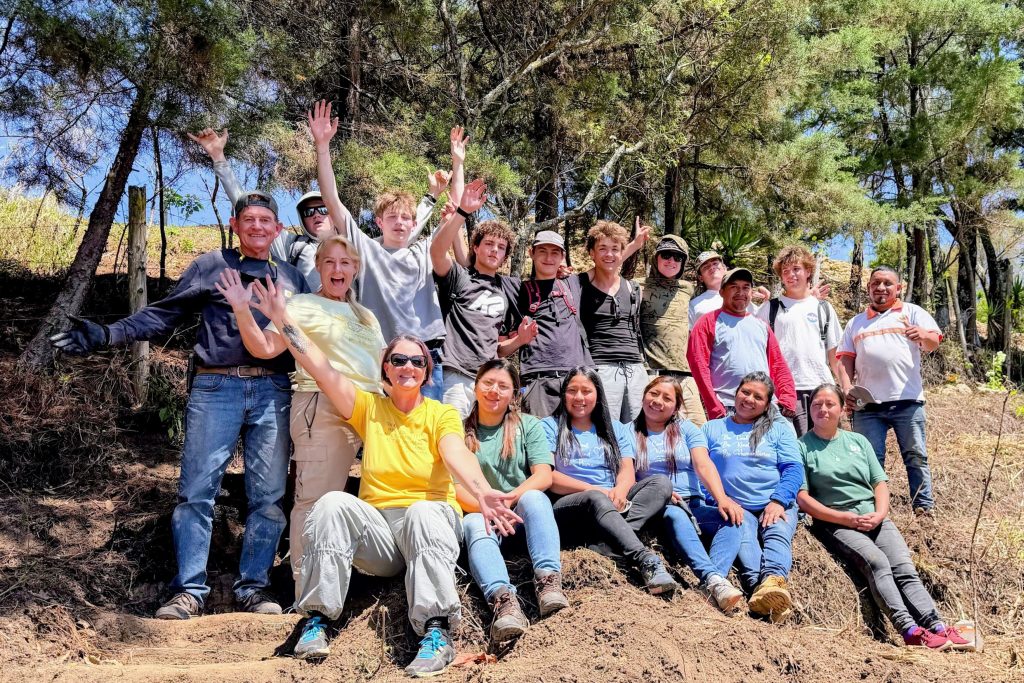
Community leadership helps keep projects tied to local needs. Be Humanitarian works with a local team in San Andrés, while volunteers take part in established programs.
That changes the volunteer’s role. Instead of arriving with a ready-made answer, the traveler joins work that already has a local purpose.
Garden towers offer a clear example. A volunteer may help build or install one. The family’s continued use tells you whether that resource has value.
The same idea applies to education, nutrition, and water projects. Local staff and families need to remain part of the work after visitors return home.
As highlighted by UNU Our World
“Rather then trying to fix problems for people, [the organization] strives to support them in finding their own paths forward… there is a particular mission ‘to empower women so that they may become independent as well as combat dependency. Dependency is not being able to move forward on your own, you have to rely on someone else, rely on an organization to give you tonight’s food.’” – UNU Our World
Ask four questions:
- Who identifies the need?
- Who owns the resource?
- Who maintains it?
- Who gives feedback?
These questions can help separate partnership from short-term service.
USAID has also promoted locally led development, including greater local leadership over development priorities and resources.
That doesn’t mean one person makes every decision. Families, teachers, community groups, local coordinators, and nonprofit staff can all have a role.
How Can Corporate Volunteers Create Longer-Term Value?
Corporate groups can add more value when their service connects with a real community need and doesn’t end after one workday.
Be Humanitarian describes corporate and group opportunities that can include hands-on service and business mentorship. A company team could help with gardening or water projects, then provide professional skills requested by local partners.
That might include technology, marketing, operations, or business planning.
The service work still matters. Employees get to meet families, see the project directly, and understand where their support goes.
But one volunteer day isn’t automatically sustainable.
A stronger plan includes follow-up support and clear goals.
- Match skills to real needs.
- Define the outcome before travel.
- Keep local partners involved.
- Plan support after the trip.
- Track activity and results.
For business leaders, the trip can also open a longer relationship. That might involve sponsorship, another visit, or professional support.
The next step should come from the community need, not from a desire to keep the company involved.
What Should You Look For In A Sustainable Guatemala Volunteer Program?
Credits: Be Humanitarian
Look for local involvement, ongoing programs, clear costs, suitable volunteer roles, and evidence that projects continue after visitors leave.
Planning for volunteer travel with Be Humanitarian connects your trip to community projects based in San Andrés near Lake Atitlán. Antigua is included as a cultural visit, not the main work site.
Trips generally last 8-11 days, with about 5-7 hours of volunteering on working days. The rest of the day can include meals, conversation, and cultural activities.
The setting also needs some planning. San Andrés sits at around 7,047 feet (2,148 meters). Older travelers and people with heart or respiratory conditions should speak with a medical professional before traveling.
Be Humanitarian describes experienced guides and nearby clinics as part of the trip setting.
Use this checklist before booking:
- Community-led: Local partners shape priorities.
- Ongoing: Programs continue after visits.
- Measurable: Results are tracked.
- Skill-matched: Roles fit real needs.
- Transparent: Costs are explained.
- Locally maintained: Projects don’t depend on visitors.
Ask what happens six or twelve months later.
That answer can tell you more than an attractive itinerary.
What Makes Be Humanitarian’s Guatemala Model Sustainable?

Seeing why Guatemala volunteer impact matters starts with connecting short visits to ongoing programs in nutrition, education, gardening, water access, and family support.
The second is education. School supplies, tuition help, English activities, and other support can continue after a volunteer leaves.
The third is self-sustainability. Garden towers show how volunteers can help create a resource that families can keep using.
Child sponsorship adds another layer. Be Humanitarian promotes sponsorship as ongoing support for children, including food and education. Published payment amounts should be checked on the current sponsorship page before they’re used in marketing.
The volunteer trip is active too. Participants may distribute water filters, help with English, work on gardens, support school activities, or spend time with children.
Antigua adds a cultural visit, while San Andrés remains the main community work location.
Tobie Spears and a local team guide the trips.
That structure gives travelers support without putting them in charge of local programs.
How Can You Make Your Volunteer Trip More Sustainable?
Choose a trip where your work supports programs that local people can continue after you leave.
Before booking, ask practical questions. Who designed the project? Who benefits? Who maintains the resource? What happens after the volunteers go home?
Those answers can tell you more than a polished trip description.
Try these steps:
- Ask who designed the project.
- Confirm what happens afterward.
- Ask about local workers.
- Request available outcome data.
- Check how fees are used.
- Match skills to real needs.
- Look for local partnerships.
Physical planning matters too. San Andrés sits at about 7,047 feet, so travelers should consider altitude and activity levels.
Working days can include 5-7 hours of volunteering, leaving time for meals and cultural activities afterward.
For older travelers, or anyone with heart or respiratory conditions, medical advice before travel is sensible.
The mindset matters most. Support the work. Don’t take over.
What Are The Main Takeaways About Sustainable Volunteer Impact?
Sustainable Guatemala volunteer impact connects a short visit with work that can continue after travelers return home. Be Humanitarian links hands-on service with programs involving nutrition, education, gardening, water access, family support, and child sponsorship.
The main points are practical:
- Volunteer hours aren’t the whole story.
- Garden towers can support household food production.
- Education can continue after the trip.
- Sponsorship can provide recurring support.
- Skills should match actual needs.
- Local people should guide projects.
- Follow-up data can show lasting results.
A volunteer trip can be meaningful without claiming that one person changed an entire community.
That’s a more useful standard.
FAQ
How Can I Tell If A Guatemala Volunteer Program Creates Real Impact?
Look beyond the number of volunteer hours. Ask whether each project has clear goals, local involvement, and follow-up. Real Guatemala volunteer impact should lead to practical results that communities can continue using after volunteers leave. Ask how the organization measures progress, who maintains the project, and whether volunteers receive updates about its results after their service ends.
What Should I Pack For Rural Volunteering In Guatemala?
For rural Guatemala volunteering, pack comfortable clothing, sturdy shoes, sun protection, a reusable water bottle, and personal toiletries. Check the program’s instructions before bringing tools, school supplies, or other donations because local teams may have specific needs. Weather and road conditions can vary in rural areas, so ask your coordinator about clothing, luggage limits, transportation, and project requirements.
How Can I Prepare For A Meaningful Guatemala Volunteer Experience?
Start by learning about the community you will visit and the work you will support. For meaningful volunteer work Guatemala, prepare to listen, follow local guidance, and respect community customs. Learning a few useful Spanish phrases can also make daily interactions easier. Set realistic expectations because a short trip cannot solve complex problems. Your role is to support existing work.
What Questions Should I Ask Before Choosing Volunteer Opportunities In Guatemala?
Ask who organizes the projects, how local communities help set priorities, and what volunteers will actually do. For volunteer opportunities Guatemala, ask about group size, supervision, safety procedures, accommodation, transportation, costs, and daily schedules. You should also ask how the organization handles project changes and what support remains after volunteers leave. Clear answers help you choose a program that fits your skills and expectations.
How Can I Stay Involved After A Guatemala Volunteer Trip?
You can stay involved by supporting ongoing projects, sharing relevant professional skills, learning about local needs, or planning another visit when appropriate. Long-term volunteer impact Guatemala does not require frequent travel. Continued support should respond to a specific community need rather than create extra work for local partners. Ask the organization which forms of follow-up support are currently useful and appropriate.
Turn Volunteer Service Into Lasting Impact
Volunteer travel can feel meaningful when you’re helping with work that a local community already needs. You don’t have to fix everything during one trip. The real value can come from showing up, learning from local partners, and leaving behind support that can continue after you go home. That makes the experience more than a short visit.
If you’re looking for a simple way to get involved, Be Humanitarian can help you take that next step. Its volunteer trips connect travelers with ongoing community programs in Guatemala, while child sponsorship offers a way to keep supporting families after the trip ends. Learn more about Volunteer Vacations And Child Sponsorship and find an option that fits you.
References
- https://ourworld.unu.edu/en/women-of-the-highlands-culturally-appropriate-empowerment-in-guatemala#1
- https://pubmed.ncbi.nlm.nih.gov/41245220/