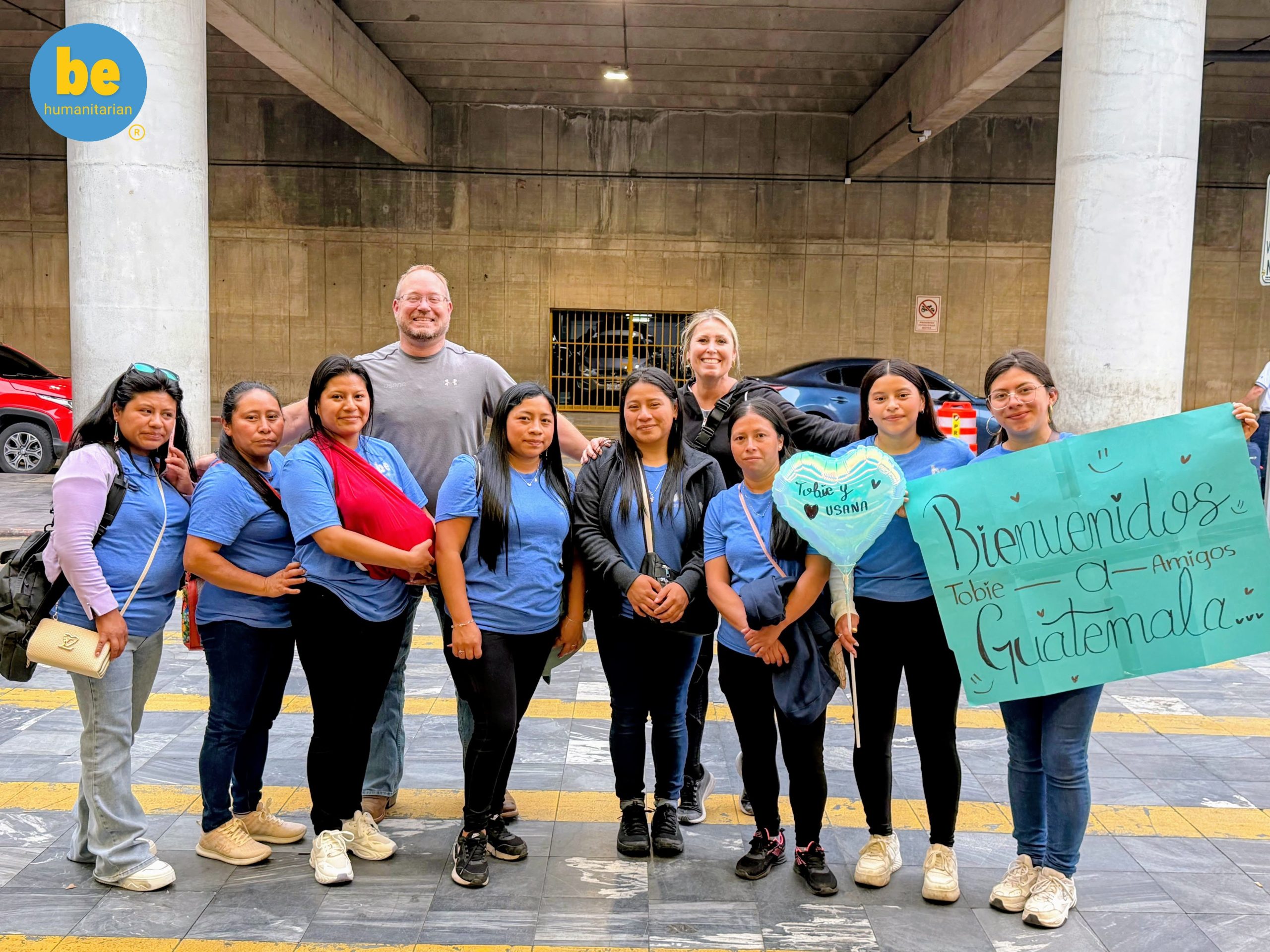
Guatemalan customs shape everyday life. They affect how people greet each other, spend time with family, and work together in their communities. For volunteers and sponsors, understanding these customs can make every visit more meaningful.
A simple greeting, a kind conversation, or showing patience can help build trust. Keep reading to learn the customs that matter most in rural Guatemala.
Quick Guide To Guatemalan Customs
Before learning the details, remember these simple tips:
- Greet people politely and take time to talk.
- Dress modestly in community settings.
- Support local leaders and community goals.
- Ask before taking photos.
- Listen more than you speak.
These small actions can help you build stronger relationships during your visit.
What Are Guatemala Local Customs?
Guatemalan customs are deeply connected to family, respect, and community life. Many traditions come from Maya cultures that have been part of the country for centuries.
Guatemala is home to more than 20 Indigenous Maya groups. Each group has its own language, clothing styles, traditions, and history. In many places, these traditions remain an important part of daily life.
Near Lake Atitlán, families often sit at the center of community life. Grandparents, parents, children, cousins, and neighbors stay closely connected. Families celebrate together, solve problems together, and support one another during difficult times.
People often take time to talk before getting down to business. A conversation may begin with questions about family, travel, or how your day is going. This is not small talk for the sake of filling time. It is how people get to know one another.
Visitors sometimes notice that life moves at a different pace than they expect. Relationships often matter more than schedules. Taking a few extra minutes to talk with someone is usually seen as respectful.
Some customs you will see often include:
- Greeting people before asking questions
- Showing respect to elders
- Listening when community leaders speak
- Dressing modestly in public places
- Being polite during meals and gatherings
- Asking permission before taking photographs
These habits may seem simple, but they help create trust. They also show that you value the people and community you are visiting. Understanding Guatemala local customs can make these interactions feel more natural and respectful throughout your visit.
Many visitors discover these values firsthand during a Guatemala volunteer travel experience where community relationships come before projects.
Which Local Guatemala Customs Matter Most For Volunteers?
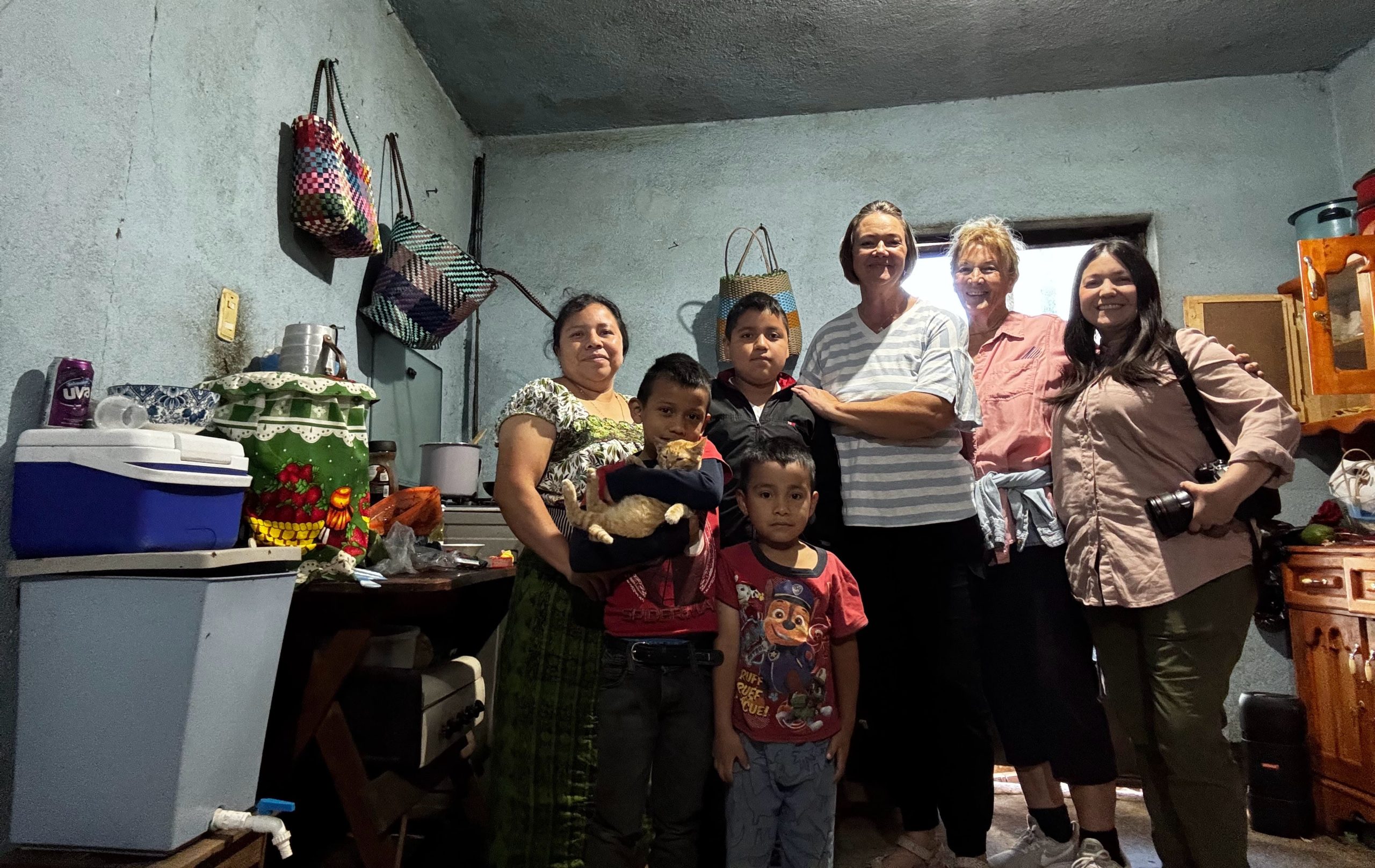 For volunteers, respect matters more than anything else.
Many people arrive ready to help. That is a good thing. But the best volunteers also come ready to learn.
A typical Guatemala volunteer program may include helping with English lessons, delivering school supplies, assisting with nutrition programs, supporting gardens, or spending time with children. During these activities, relationships are often more important than completing a task quickly.
First impressions matter.
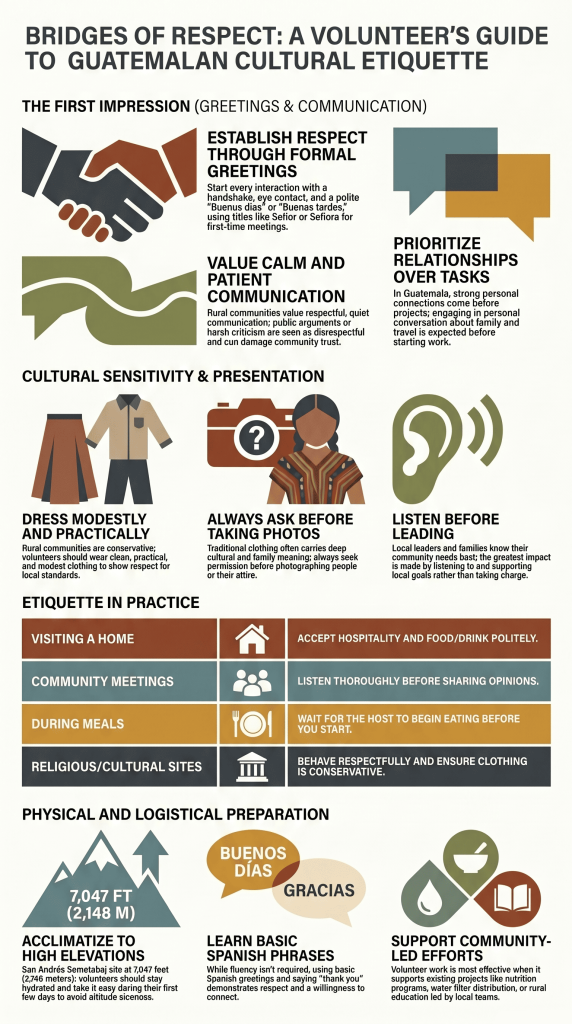
When meeting someone, a handshake and friendly greeting are usually appreciated. Saying “Hola,” “Buenos días” in the morning or “Buenas tardes” later in the day shows respect. Even if your Spanish is limited, making the effort often means a lot.
Using titles such as Señor or Señora during first meetings can also help show courtesy.
The way you dress matters too. Many rural communities prefer modest clothing. Young men never take their shirts off when working outside. Wearing comfortable pants, longer shorts, and shirts that provide good coverage are often the safest choice.
Photography is another area where respect is important.
Traditional clothing can carry family, cultural, and personal meaning. Some people are happy to have their picture taken. Others may not be. Asking first shows respect and helps avoid uncomfortable situations. Remember that this is their normal life.
Listening is one of the most valuable skills a volunteer can bring. Understanding local Guatemala customs often starts with paying attention to how families, teachers, and community leaders interact with one another.
Local families understand their community better than any visitor. They know the challenges they face and the solutions that work. Volunteers often have the best experiences when they spend time listening and learning.
A volunteer who asks questions and pays attention usually builds stronger relationships than someone who arrives with all the answers. This approach helps volunteers understand which Guatemala customs matter in everyday community life.
What Is Cultural Etiquette In Guatemala?
Cultural etiquette in Guatemala is based on respect, patience, and kindness.
Many of the rules are simple. They are the same habits that help people get along anywhere in the world.
| Situation | Recommended Etiquette |
| Meeting Someone | Shake hands and offer a friendly greeting which is often a kiss on each cheek, |
| Visiting A Home | Accept hospitality politely |
| Taking Photos | Always ask permission first |
| Community Meetings | Listen before sharing ideas |
| Meals | Before each meal you will always say “Buen Provecho” which means enjoy your meal |
| Religious Or Cultural Sites | Dress modestly and behave respectfully |
Conversations often feel personal. People may ask about your family, where you live, or why you decided to visit Guatemala.
For some visitors, this can feel surprising at first. In many Guatemalan communities, these questions help build trust. People want to know who you are, not only what you are doing.
Many communities also prefer calm communication. Public arguments, raised voices, or harsh criticism can make situations uncomfortable. Following cultural etiquette in Guatemala helps visitors communicate respectfully and build stronger relationships.
Research from EurekAlert shows
“Mayan families in Guatemala engaged harmoniously in all but about 5% of their interactions, compared to European American families who showed conflict or resistance more than 20% of the time under similar conditions. The study noted that “maintaining harmonious relations is a major cultural value of many Indigenous communities across the Americas.”” – EurekAlert
Trust takes time to build.
A volunteer may spend several days getting to know families before deeper conversations happen. That is normal. Strong relationships often grow slowly.
Many visitors find that the most meaningful moments happen during ordinary parts of the day. Sitting together at dinner. Walking through a village. Talking with parents after school activities. Sharing stories about daily life.
Those moments often stay with volunteers long after they return home.
Why Respect Local Guatemalan Customs?
Respecting local customs helps create better partnerships. Learning why people respect local Guatemalan customs can help volunteers and sponsors build trust within the communities they support.
Many organizations involved in Guatemala humanitarian aid, poverty alleviation, and sustainable development focus on working alongside communities instead of making decisions for them.
This approach works because local families understand their own needs.
Families in rural Guatemala have generations of knowledge about farming, education, nutrition, and community life. Their experience helps guide local projects and programs.
As noted by NIH
“That language differences were cited as a major barrier by Guatemalan healthcare staff and patients during volunteer missions, with one participant noting translation required moving from an Indigenous language to Spanish and then to English: “It’s hard, but you have to do it.” The study, led by Guatemalan researchers, concluded that understanding the local language and working collaboratively with hosts is essential for effective programs.” – NIH
Organizations that encourage people to respect local Guatemalan customs often see stronger collaboration between volunteers and community members.
When volunteers respect local customs, several positive things can happen:
- Trust grows faster
- Communication improves
- Community members become more involved
- Cultural exchange feels more natural
- Relationships last longer
Respect also changes the volunteer experience itself.
Instead of feeling like a visitor looking in from the outside, volunteers often become part of daily community life.
Many people return home remembering conversations more than projects. They remember sharing meals. They remember laughing with children. They remember listening to family stories.
Those memories often become the most valuable part of the trip.
How Does Volunteer Travel Support Community Partnerships In San Andrés?
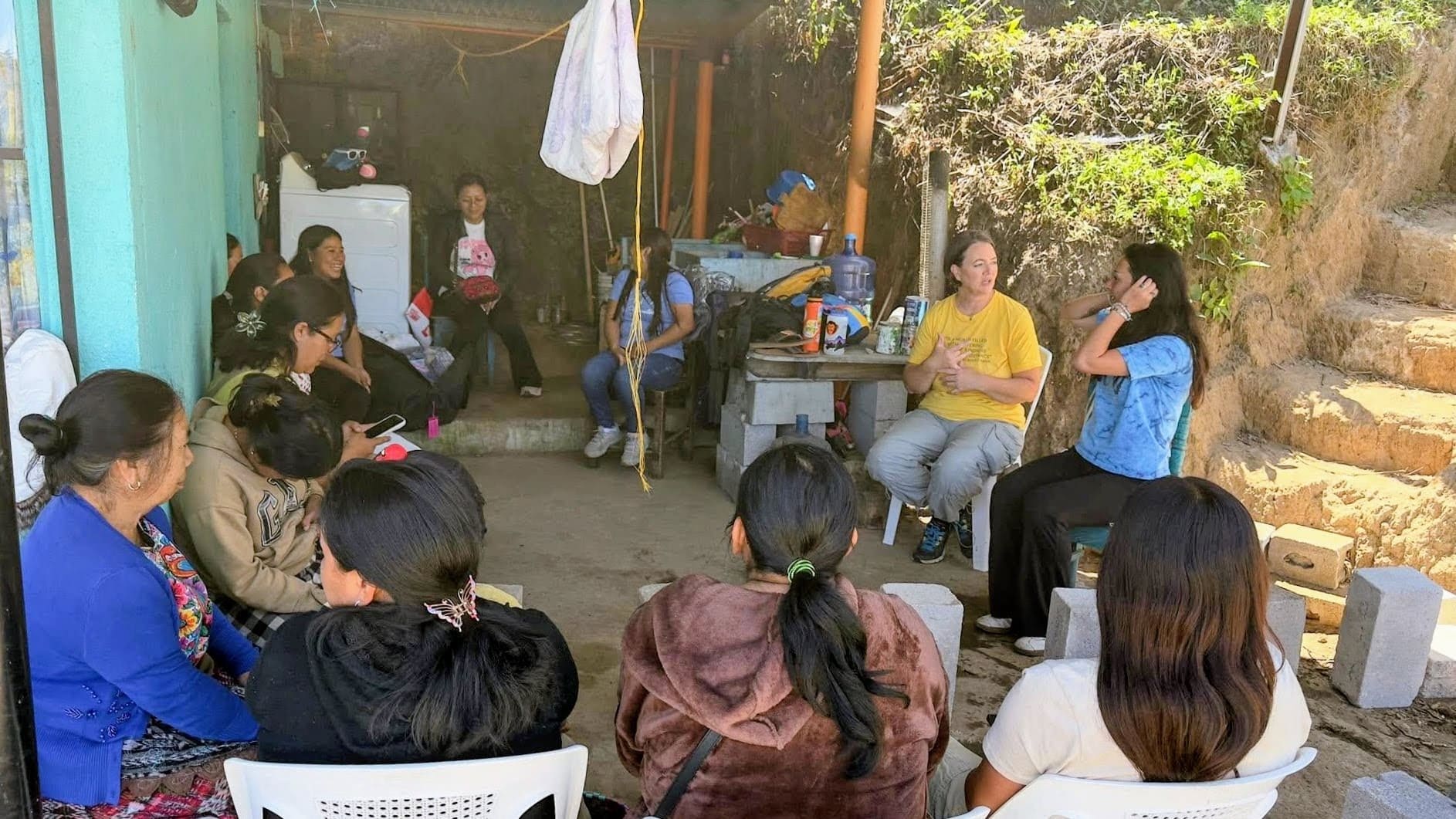 Volunteer travel has the greatest impact when it supports local efforts already in place.
Near Lake Atitlán, San Andrés is in the mountains surrounding Lake Atitlán, with the municipality averaging about 7,047 feet (2,148 meters), though the town center sits around 6,106 feet (1,861 meters).
Programs led by Tobie Spears and the local team focus on projects connected to education, nutrition, family support, and opportunity.
A typical Guatemala volunteer trip lasts 8 to 11 days. Volunteers spend their days working alongside local residents rather than watching from the sidelines.
Activities may include:
- Supporting English classes
- Delivering backpacks and school supplies
- Assisting child nutrition programs
- Distributing water filters
- Helping with gardening projects
- Playing soccer and games with children
- Spending time with families and community members
- Building Homes
- Building Bathrooms
Evenings are often more relaxed. Volunteers may share a meal, talk about the day’s experiences, and prepare for the next day.
Unlike traditional tourism, these trips focus on relationships built over time. Volunteers gain a better understanding of daily life while building real connections with the community.
How Does Child Sponsorship Strengthen Cultural Understanding?
Credits: Be Humanitarian
Child sponsorship becomes more meaningful when sponsors understand the people and communities behind the program.
Programs focused on sponsor Guatemalan children work best when they build relationships, not just provide financial support.
Many sponsors first learn about these programs through volunteer travel. Meeting children, families, teachers, and community leaders gives them a clearer picture of daily life and community needs.
Guatemala still faces challenges related to poverty and child nutrition. In most rural areas, 46% young children experience chronic malnutrition.
Because of this, programs that support child nutrition, food security, literacy, rural education, and child welfare in Guatemala continue to make a real difference. These efforts help children stay healthy, support families, and create more opportunities for communities to grow and thrive over time.
Cultural understanding often changes how sponsors view these communities. For many sponsors, learning about Guatemala local customs creates a deeper connection with the children and families they support. Instead of focusing only on challenges, they begin to see the strengths, traditions, hard work, and hopes of the families they support.
That understanding helps create stronger, more respectful relationships that can last for years.
What Etiquette Tips Should Humanitarian Travelers Follow?
A little preparation can make your volunteer trip smoother and help you connect with local families.
If you are exploring volunteer abroad, humanitarian volunteer, or volunteer vacation opportunities, a few simple habits can make a big difference.
Learning basic Spanish phrases is a great place to start. You do not need to speak fluently. Simple greetings and polite expressions show respect and often help start conversations.
It is also helpful to pack modest clothing. Many rural communities dress conservatively, and comfortable layers work well since temperatures can change during the day.
Visitors should be aware of the area’s elevation. San Andrés sits at 7,047 feet (2,148 meters) above sea level. Higher elevations can affect breathing and energy levels. Anyone with heart or respiratory conditions should speak with a healthcare professional before traveling.
Good preparation also includes thinking about safety. Programs that work with experienced local guides can help volunteers navigate the area, arrange transportation, and access medical care if needed.
Before your trip, keep these tips in mind:
- Drink plenty of water throughout the day
- Take it easy during your first few days at higher elevation
- Ask permission before taking photos of people
- Respect local schedules, events, and traditions
- Listen carefully to local leaders and community members
These simple steps can help create a more positive and rewarding experience for everyone involved.
How Local Customs Enhance The Volunteer Experience
 Understanding local customs helps volunteers build stronger relationships with the people they meet.
Many volunteers arrive focused on projects. They leave thinking most about the people.
A volunteer might spend the morning working in the community, building gardens, building a home or bathroom, the afternoon helping in an English class, and the evening having dinner and talking with a local family. Throughout the day, cultural awareness helps make those interactions more meaningful.
It may be laughter during a soccer game. A conversation while helping prepare a meal. Children showing their schoolwork. Parents sharing their hopes for the future.
These moments build trust.
Organizations focused on community partnership, volunteer outreach communities, and empowering families through education and nutrition in Guatemala understand that lasting progress grows from strong relationships.
Respect for local customs helps those relationships grow.
The result is a volunteer experience that feels personal, meaningful, and connected to the people who call the community home.
FAQ
What types of projects are included in a Guatemala volunteer program?
A Guatemala volunteer program may include education, nutrition, housing, and community improvement projects. Volunteers can assist with a Guatemala literacy program volunteer initiative, support Guatemala rural education, organize Guatemala school supplies volunteer activities, or participate in Guatemala stove installation volunteer projects.
These programs strengthen Guatemala community development and provide practical support to families experiencing economic hardship.
Can families, retirees, and professionals volunteer in Guatemala?
Yes. A Guatemala family volunteer trip allows parents and children to serve together while learning about local culture. A Guatemala retired volunteer or Guatemala older professional volunteer can contribute valuable skills in education, business, healthcare, or community development.
Whether joining a Guatemala group volunteer trip or Guatemala individual volunteer trip, participants help support meaningful projects that benefit local communities.
What community projects do volunteers commonly join in Guatemala?
Many volunteers participate in Guatemala community development projects that address local educational and economic needs. Common opportunities include Guatemala rural education initiatives, Guatemala literacy program volunteer activities, and Guatemala school supplies volunteer programs that provide learning resources for students.
These projects often operate through a Guatemala community partnership approach that supports Guatemala sustainable development and encourages long-term local leadership.
Are there volunteer opportunities beyond nutrition and education programs?
Yes. Many Guatemala humanitarian volunteer programs focus on issues such as Guatemala poverty alleviation, Guatemala food security, and Guatemala rural poverty.
Volunteers may assist with a Guatemala income opportunity program that helps families increase household earnings or support a Guatemala self sustainability program. Some projects also involve Guatemala stove installation volunteer work that promotes Guatemala safe cooking practices through improved Guatemala wood burning stove solutions.
What cultural experiences can volunteers expect during their trip?
A Guatemala volunteer experience often includes opportunities to learn directly from local communities. Volunteers may participate in Guatemala indigenous communities volunteer activities, visit traditional villages, and interact with local families.
Some programs also include visits to a Guatemala local market, cultural excursions near Lake Atitlán, and educational experiences that help volunteers better understand local customs, traditions, and daily life. If you are in Guatemala make sure you also get to spend a day visiting the colonial town of Antigua.
Building Meaningful Connections Through Respect
When you volunteer in Guatemala, small actions can make a big difference. Taking time to learn local customs, greet people respectfully, and show patience helps you build trust with children, families, and community leaders. That’s what creates real connections.
If you’re looking for a simple way to support lasting change, Be Humanitarian can help you get started. Through volunteer programs, child sponsorship, and family support initiatives, you can be part of community-led progress that lasts. Learn more about volunteer in Guatemala empowering communities and take the next step today.
References
- https://www.eurekalert.org/news-releases/1065141
- https://pmc.ncbi.nlm.nih.gov/articles/PMC12857627/