
You come to volunteer in Guatemala to do something real and connect beyond the tourist path. Expect a structured, guided experience with days full of purposeful work. You’ll be in San Andrés, near Lake Atitlán, supporting long-term projects focused on children, education, and nutrition.
Your schedule is active, 5 to 7 hours of hands-on support daily, with meaningful time shared with other volunteers. This is a curated journey led by experienced guides and a local team.
If you want a feel-good trip with genuine impact, keep reading to see how your days unfold.
What to Expect During Your Volunteer Experience
These key points give a realistic overview of how the week is structured, from adjusting to the environment to contributing through meaningful daily work.
- The first day is about settling in: Orientation helps you adapt to the local culture before project work begins.
- Daily work is hands-on and community-focused: Most days include 5–7 hours supporting education, gardening, or local health initiatives.
- The experience is built on long-term relationships: The focus is on trust, consistency, and partnership with the community rather than short-term impact.
What to Expect Volunteering in Guatemala: The Foundation of Partnership

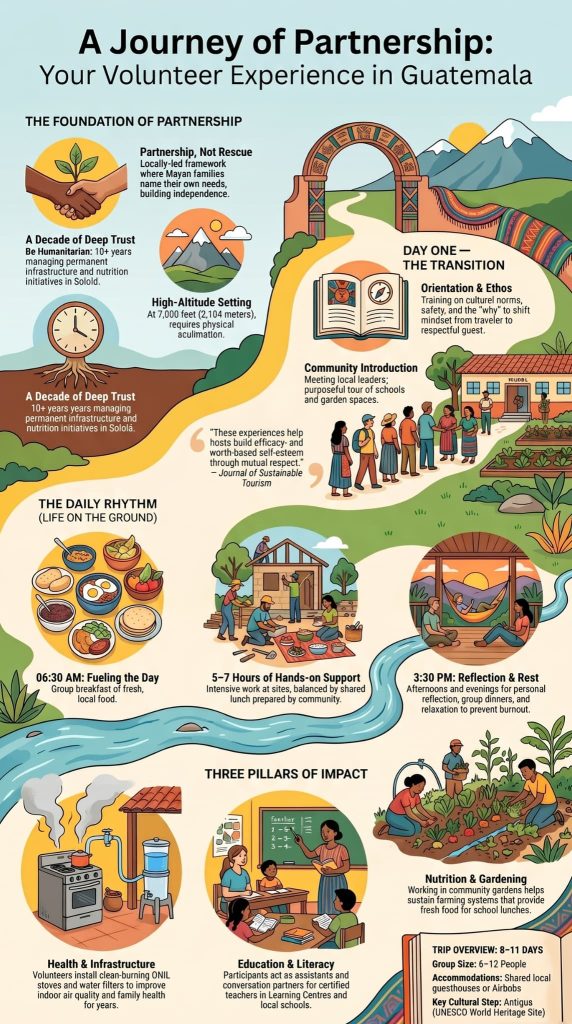
True sustainable development operates on partnership, not rescue missions. For over a decade, Be Humanitarian has managed permanent infrastructure, nutrition, and literacy initiatives in the Sololá department, establishing a foundation of deep familial trust.
Volunteers plug directly into this pre-existing, locally led framework, which shapes what to expect volunteering in Guatemala and helps avoid short-term, unvetted projects.
The communities in the Guatemalan highlands, mainly Mayan (Kakchikel or other Mayan language) families, lead the way. They name their needs, like better nutrition through school gardens, better English for their children, or cleaner water for their homes.
The organization’s job is to give steady support and resources. Your job as a volunteer is to lend your hands and heart to that ongoing mission.
Working side-by-side on these community-led projects fosters deep mutual respect. While local families often face initial hesitation or uncertainty when welcoming new groups into their spaces, field data from the Journal of Sustainable Tourism confirms that
“Through the volunteer tourism experience, the host is able to build efficacy- and worth-based self-esteem. . . . The hosts’ experiences proved to be a journey that bred feelings of nervousness and fear, but positive views of the self and improved self-esteem emerged in the analysis.” – Journal of Sustainable Tourism
What The Work Feels Like
This makes the work feel real and needed. You won’t be painting a wall that gets painted again next month. You’ll be:
See rural communities while building a garden for a family with our garden team.
- Installing a clean-burning, fuel-efficient cookstove that will improve a family’s health for years. ONIL stoves are one option used in Guatemala programs.
- Helping in a school where certified teachers are already doing the hard work of education. You become an assistant, a conversation partner, an extra set of hands.
- Building homes for a family who inherited land, but can’t afford the $15,000 it costs to build their own home.
- Building a bathroom to create a safe alternative for a family to have their own private bathroom and shower.
Local leaders direct every single project. This specific strategy separates real community development from basic sightseeing. Retirees, business professionals, and child sponsors choose this program because local families retain ownership of the results. The process builds long-term independence instead of temporary dependence on charity.
The Setting and Your Health
The setting itself demands respect. San Andrés sits at approximately 7,047 feet (2,148 meters) in the Guatemalan highlands. The air is thin and cool. It’s beautiful but real.
For seniors or anyone with heart or breathing concerns, talking to your doctor before the trip is a smart step. This altitude isn’t a barrier; it’s part of the context, a reminder you are in a powerful, different place.
The Trip Structure
The trip is set for 8 to 11 days. This is long enough to build a rhythm and relationships, but short enough to keep energy and focus.
One day is saved for visiting the colonial city of Antigua, a UNESCO World Heritage Site since 1997.
What to Expect on Guatemala Volunteer Vacations: A Curated, Supported Journey
The phrase “volunteer vacation” might bring to mind unorganized efforts or quick visits, but understanding what to expect on Guatemala volunteer vacations reveals a much more structured experience
What you should expect here is the opposite: a carefully planned and fully supported experience.
From the moment you land at the airport in Guatemala City, you are in the care of a team. A driver meets you, and the trip begins, giving you your first look at the stunning landscape.
You’ll stay in clean, local Airbnbs or guesthouses, sharing a room with other volunteers. It’s not a resort, but it is comfortable and safe, building a sense of teamwork from day one.
Your Support Team
Your guide is Tobie Spears, someone with deep experience in the region, is your anchor. Tobie handles all the details, translates cultural points, keeps you safe, and helps you connect with the community. You also have constant support from a local team who live and work there.
This structure is key. It lets you focus completely on the experience and the people you’re there to support, not on finding buses or wondering where to go. Safety is a priority with clear plans and access to nearby clinics, so you can feel confident.
The Group Dynamic
A typical group includes 6-12 people with a mix of ages and backgrounds: retired teachers, business people, individuals sponsoring a child who want to see the impact. The feeling is one of shared purpose. Evenings are often spent together over a meal, talking about the day.
This curated model appeals to travelers seeking meaningful Guatemala volunteer vacations without the stress of planning every detail alone. It provides the framework that turns good intentions into real, effective help.
Daily Guatemala Volunteer Life: Rhythm and Impact in San Andrés
So, what does daily Guatemala volunteer life actually look like on the ground? Imagine a rhythm that is full, purposeful, and feels natural.
Your day starts early, around 7:30 AM, with a group breakfast. The food is fresh and local, eggs, beans, tortillas, fruit, fuel for the day.
After eating, your group travels together to the project site. The work begins and typically lasts 5 to 7 hours, with a break for a shared lunch, often made by community members.
Your Daily Work
The activities change, but they are always hands-on and tied to the community’s goals.
- Gardening Days: You’ll tend to community gardens or sustainable gardening systems that provide fresh food for families. You’re weeding, harvesting, and learning about nutrition alongside local women.
- Classroom Days: You support the teacher by reading one-on-one with students, helping with English, or organizing an educational game. The energy is chaotic and joyful.
- Health & Infrastructure Days: You might help install water filters in homes, showing a family how to use them. Or you could help build a clean-burning cookstove, which greatly improves indoor air quality.
There is also time for pure connection: playing soccer with kids, doing arts and crafts, or just talking (with help from your guide or your own Spanish). Always follow local cultural norms for interaction.
The work ends in the mid-afternoon. You go back to your lodging to rest, reflect, or join an optional group activity. Dinner is another social, relaxed meal, followed by an early night.
A Typical Daily Schedule
| Time | Activity |
| Morning (7:30 AM – 12:00 PM) | Group breakfast, travel to site, focused hands-on work. |
| Midday (12:00 PM – 1:00 PM) | Shared lunch, often with community members. |
| Afternoon (1:00 PM – 4:30 PM) | Continued work or community connection activities. |
| Late Afternoon & Evening (4:30 PM onward) | Return to lodging, personal time, group dinner, relaxation. |
This rhythm makes sure your help is meaningful while preventing burnout. You are actively taking part in the daily life of the community, not just watching it.
What Happens on the First Day: Orientation and Acclimation
Credits: Be Humanitarian
Your arrival day is for transition, orientation, and adjustment, setting the stage for what happens on first day activities and community introductions
After being picked up and settling into your lodging in San Andrés, you’ll meet the local team. The first group meeting provides a full orientation on the partnership philosophy, cultural norms, and safety.
This initial orientation serves a vital logistical and ethical purpose. As emphasized by global development standards from World Physiotherapy,
“Pre-departure training for enhancement of international service-learning experiences is recommended to better prepare health-care providers in facing ethical and cultural demands of resource-limited countries.” – World Physiotherapy
You’ll learn the history of the work, the community you’ll serve, and the “why” behind each project. Practical details like water, meals, health, and respectful dress are covered to build understanding. You’ll be reminded to listen to your body regarding the altitude.
Sharing your dinner together starts the group bonding. You go to sleep looking forward to the meaningful work ahead.
First Day Expectations on Guatemala Volunteer Vacations: From Tourist to Participant

Building on your arrival, the first full day sets the tone for your entire week and helps establish realistic first day expectations for new volunteers. Your focus should be on fitting in and learning, not on maximum output.
After breakfast, you will likely visit the project sites. This is a tour with a purpose. You’ll see the school or learning center, the garden spaces, and maybe a home where a stove or filter will be installed.
You’ll meet some of the local leaders and community members you’ll work with. These introductions are the foundation.
The Day’s Focus and Activities
The work on this day is often lighter and highly guided. You might:
- Help sort materials for the garden.
- Organize books in a classroom.
- Receive detailed training on how to properly install a water filter or complete other safety-checked tasks.
The emphasis is on doing things with the community, not for them, and doing them right. This day is about building comfort and skill in your new setting.
Lunch is a key moment, often your first meal shared directly with people from the community, a quiet but powerful act of connection.
By the afternoon, you’ll likely start your first real project work, but with full support. The guide and local team are right there to answer questions, make introductions, and help.
The goal by the end of this day is for you to feel oriented, useful, and connected to the rhythm of the place.
You understand the basic schedule, you’ve seen the faces of the people you’re here to support, and you’ve finished a few small tasks. You go back to your lodging with a quiet but deep sense of accomplishment, ready for the fuller days ahead.
FAQ
What should first-time volunteers expect in Guatemala?
First-time volunteers usually join Volunteer programs focused on community service, health care, education, or sustainable gardening.
Many international volunteers stay in a volunteer house near Antigua Guatemala, Panajachel or Guatemala City. Most projects include training sessions, cultural orientation, and support from a local team. Volunteers also experience Mayan culture, local food, Spanish Lessons, and meaningful community activities throughout their service trip.
Do volunteers need Spanish skills before arriving?
Most volunteer opportunities do not require advanced Spanish skills before arrival. Many programs offer Spanish Lessons with certified teachers to help volunteers communicate with Guatemalan families and local communities.
Learning basic phrases improves teamwork skills, cultural exchange, and daily communication. Volunteers working in community development projects often benefit from stronger language skills during placements.
What is daily life like during volunteer placements?
Daily life usually includes project work, shared meals, cultural activities, and time with other international volunteers. Volunteers stay in comfortable family homes or airbnbs accommodations in Antigua Colonial City and most of their time is spent near Lake Atitlán.
Adventure time may include volcano treks, coffee plantation tours, Guatemalan market visits, arts and crafts workshops, or exploring UNESCO World Heritage Site locations such as Antigua Guatemala and Parque Central.
What costs should volunteers prepare before traveling?
Financial commitments are split transparently between personal logistics and grassroots impact. Program fees directly cover secure local transport, vetted guesthouse accommodations, and Spanish translators, while a baseline percentage directly funds raw materials, like local timber, cement, and certified school curricula, retained entirely by the San Andrés community.
Additional costs may include trips to Santiago Atitlán, Cerro de la Cruz, and other cultural destinations across Guatemala during free weekends.
The Lasting Impact Of Volunteering In Guatemala
Volunteering in Guatemala leaves you with more than memories. It gives you a closer understanding of community, resilience, and the value of steady support. You see how education, nutrition, and personal connection can help families build stronger futures over time.
What makes the experience meaningful is how personal it becomes. You meet the people behind the mission and witness the impact directly. The experience is not about rescue. It is about partnership, trust, and showing up consistently.
Learn more about volunteering and sponsorship opportunities at Be Humanitarian.
References
- https://www.tandfonline.com/doi/full/10.1080/09669582.2021.1888112
- https://world.physio/congress-proceeding/evaluating-effectiveness-pre-departure-training-inter-professional-service