

The best Guatemala volunteer trips keep things simple: a few hours of useful work each day, and plenty of time to rest and look around. Many are based near Lake Atitlán, including San Andrés at 7,047 ft (2,148 m). You might spend the morning helping at a small school or with meal prep, then volunteer in the English classes or play a game of soccer on the local soccer field
Groups such as Be Humanitarian run 8-11 day trips with a set schedule and local staff, including options to travel with us on guided, small-group experiences. The altitude can take a day or two to get used to, so it is smart to check with your doctor first. Keep reading to find a trip that feels right.
Volunteer Trip Highlights
- 8-11 day guided trips with 5-7 hours of work each day tend to suit most retirees.
- In San Andrés near Lake Atitlán, projects often focus on schools, meals, and small garden plots.
- Some travelers continue support through child sponsorship after they return home.
Quick Picks For Retiree Volunteers
For most retirees, the right trip feels steady from the start. Near Lake Atitlán, days often follow the same shape. Breakfast, a few hours of work, a delicious lunch, then an afternoon project.
In San Andrés, the altitude is noticeable at first. Walking uphill can feel harder than expected. After a day or two, most people adjust. The town is quiet. Kids head to school in the morning. Small shops open and close without much fuss.
Volunteers join what is already happening, which is why many see these as some of the best volunteer programs for steady, simple routines. A classroom that needs an extra set of hands. A kitchen where meals are prepared in batches. You are not there to change the plan, only to help it move along.
What people tend to like:
- Someone on-site who keeps the day organized, including coordinators like Tobie Spears
- Knowing where to go if something feels off, with clinics not far away
- Time in the afternoon to sit, walk, or
It takes the pressure off. You are not guessing what comes next.
What Types Of Volunteer Trips In Guatemala Fit Retirees Best?
Short trips usually make more sense. A week or two is enough to settle in without feeling worn down.
In San Andrés, the work stays close to daily life. You might sit with a small group of kids after school, help sort supplies, or spend time in a garden behind someone’s home.
Longer programs exist, but they can feel like a stretch. Many retirees prefer to come, take part, and leave before the routine starts to feel heavy.
Research from the National Institutes of Health (NIH) shows
“Retirees engaging in cognitively demanding volunteering had better cognitive functioning than those who did not volunteer at all. Cognitively demanding volunteering activities should be promoted to maintain the psychological and cognitive well-being of retired persons.” – Journal of Aging and Health
Common roles include:
- Sitting with kids during after-school hours, helping them stay focused
- Joining simple health talks or demonstrations
- Helping tend small garden plots that families use for food
None of it is complicated, which reflects why volunteers travel in the first place. You show up, you help, and then you step back.
Why Is Spending Time with Children Ideal For Retirees?
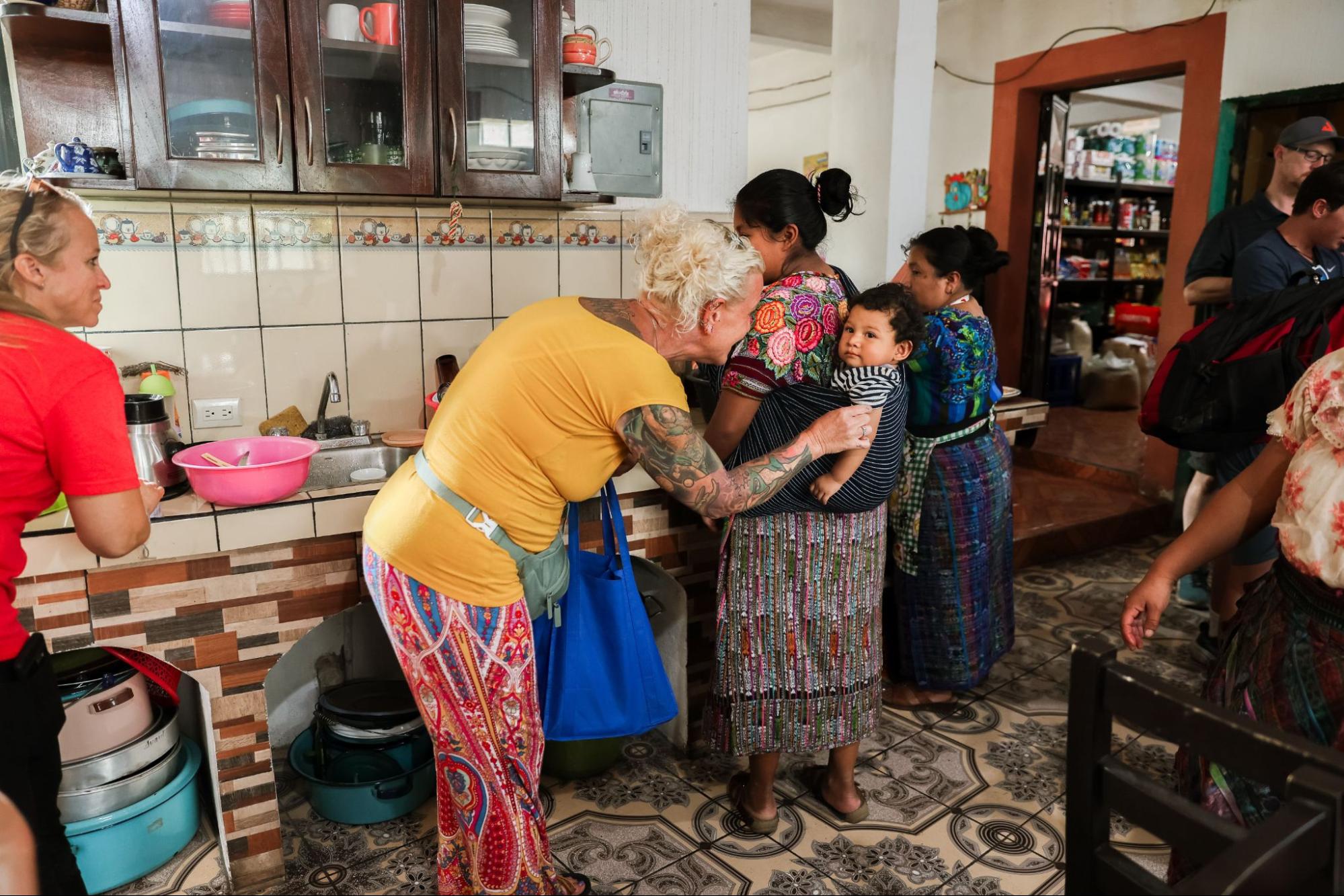
This work leans on patience more than energy. That suits a lot of retirees.
A typical day might mean sitting beside someone during lunch, walking slowly across a room. The days are full of new experiences and new adventures.
There is a level of comfort in it. You are not trying to keep up. You are meeting people where they are.
As highlighted by Voluntas: International Journal of Voluntary and Nonprofit Organizations
“As older populations continue to rapidly grow, governments and social institutions will need to, leverage seniors’ knowledge, expertise, and skills to enhance social and institutional benefits. Formal volunteering, [provides] social connectedness and enhanced well-being while potentially reducing their support service needs.” – Voluntas Journal
In Guatemala, programs often run with small teams. Extra help, even in quiet ways, makes a difference.
Typical tasks include:
- Helping during meals or simple routines
- Sitting and reading, or pushing a child on a swing
- Assisting staff with small, day-to-day needs
You do not need special skills. You need time and attention.
For many retirees, that feels like enough.
How Do Sustainable Gardening Programs Suit Older Volunteers?
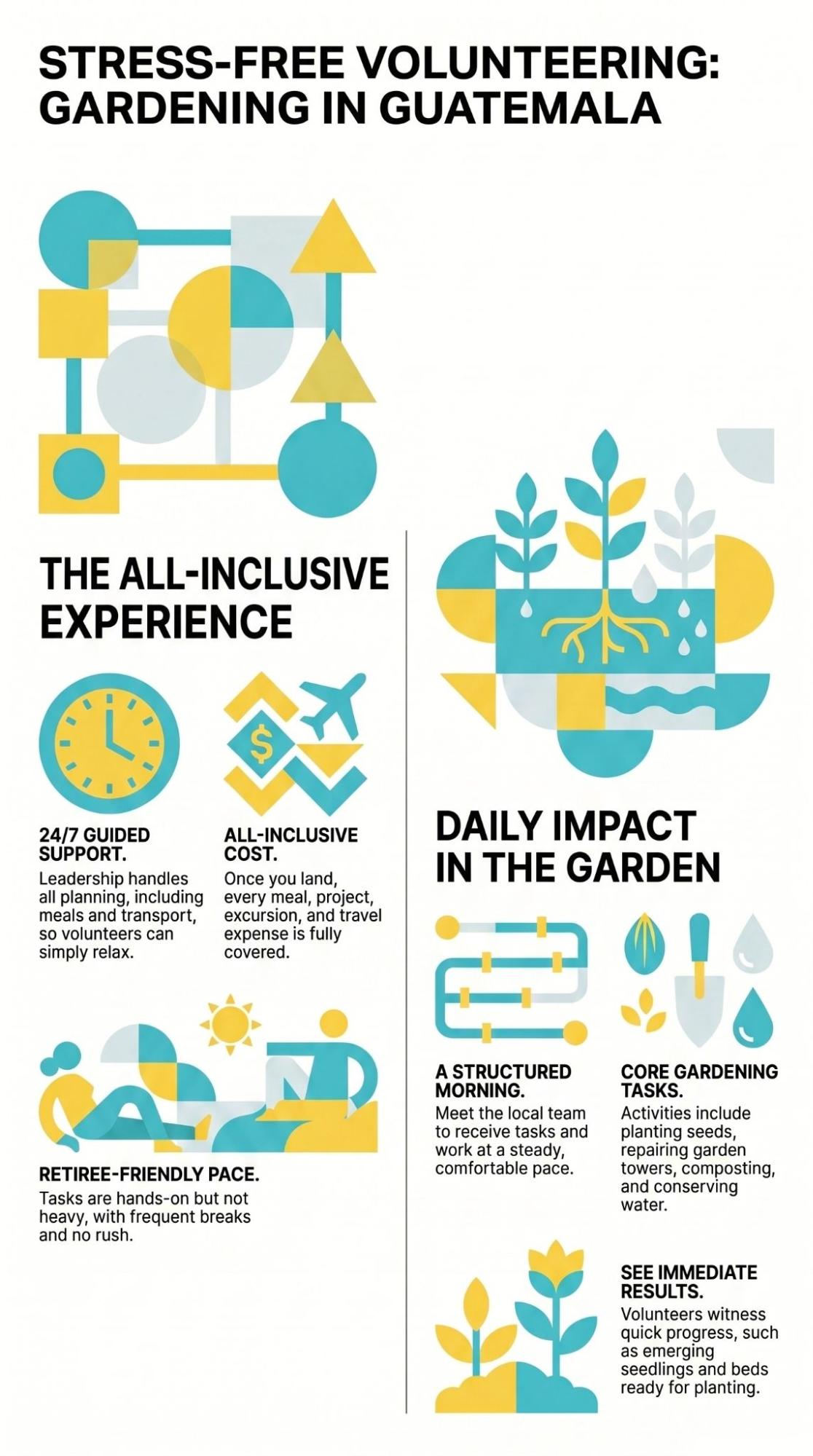
Garden work tends to suit retirees. It is hands-on but not heavy, and you can take breaks when you need to.
People come for a short stay, then sometimes return. Please remember that we are a 24/7 guided trip. At no time does a volunteer need to plan where they will eat, pay for their meal, what project to work on or how to get somewhere on their own. We stick together as a group with clear leadership allowing volunteers to relax into the experience. Our cost includes everything they need once they land in Guatemala. All travel, meals, projects and excursions are included.
A typical morning is straightforward. You meet the local team, get a task, and work at a steady pace.
You might:
- Water or repair small garden towers
- Plant seeds, move soil, or pull weeds
- Sit in on short lessons about growing food at home
There is no rush. There is a lot of laughter. You see small results quickly, like seedlings coming up or a bed ready for planting.
What the work often includes:
- Preparing soil and planting with guidance
- Using food scraps for compost
- Carrying and saving water where it matters
You help for a short time, but the routine stays in place after you leave.
Are Voluntourism Trips Like Be Humanitarian A Good Fit?
For many retirees, having a plan makes the trip easier. Programs like Be Humanitarian set a clear schedule and keep each day predictable.
These trips usually run 8-11 days, often blending service with light exploration similar to Guatemala eco tours. Tobie Spears and a local team guide the group. Volunteers join work that is already underway, such as school support or meal prep.
The role is simple. Show up, help, and follow the lead of the local team.
| Feature | Details |
| Activities | Gardens, school help, distribute water filters, stove builds |
| Location | San Andrés near Lake Atitlán |
| Structure | 8-11 days, guided, locally run |
| Impact | Food access, schooling, and daily stability |
What stands out for many:
- Clear plans for each day
- Time to talk with families and staff
- Breaks are built into the schedule
It works well if you want to help without sorting out the details yourself.
What Costs, Duration, And Flexibility Should Retirees Expect?
For a fully guided experience costs are about $2000 per week. Some people stay longer, but many retirees choose shorter trips.
An 8-11 day stay is common. It gives enough time to take part without getting tired of the routine.
Most programs include:
- A place to stay, volunteers always stay together often with a host family
- Delicious meals, cooked on site
- Local transport and coordination – volunteers don’t worry about a single logistic.
You can learn a little Spanish. Even a few phrases can make daily life easier.
The cost helps keep the program running, and some travelers continue through sponsorship or donations after they leave. Staff, supplies, and local partners depend on it, whether volunteers are there or not.
What Real Experiences Say About Guatemala Volunteer Trips
Credits: Be Humanitarian
Ask people what stayed with them, and they usually talk about a person or a moment. A child who runs to them after school. A cook who hands them a task without much explanation. It becomes familiar faster than expected.
On Reddit, some mention smaller groups. Be Humanitarian belives that there is value in small groups and keeps their trips small. Often around 10 volunteers. We travel like a family.
What people point out:
- Time spent inside daily life, not set apart from it
- Work that is easy to understand, like helping in class or with meals
- Smaller groups, where you see the same faces each day
The harder parts are ordinary getting used to slower days and fewer choices
Many retirees lean toward guided trips for this reason. Fewer loose ends, less to sort out on arrival.
Is Guatemala Safe And Comfortable For Retiree Volunteers?
 With a structured program, most things are set before you arrive. Housing, transport, a contact person if something comes up.
Antigua Guatemala is a common stop. It is busier, with more traffic and shops. Some visit for a day or two, then move on.
Lake Atitlán and towns like San Andrés feel quieter.
A few habits people stick to:
- Stay within the areas set by the program
- Travel with the group or a guide
- Know where the nearest clinic is
The altitude might take getting used to. At 7,047 ft (2,148 m), a short hill can slow you down at first. After a day or two, most people find their pace. If you have heart or breathing concerns, it is better to check with a doctor before the trip.
How To Choose The Right Guatemala Volunteer Trip For Your Retirement
It helps to picture a normal day. Not the brochure, just the routine.
Around Lake Atitlán, mornings are for work. Afternoons open up. Some people rest. Others walk through town.
Things to think through:
- How long do you want to be on your feet
- The kind of setting you prefer, school, kitchen, or garden
- Whether you want a fixed plan or some open time
What tends to make it easier:
- Programs that already work with local teams
- A clear plan for each day
- A way to stay in touch or stay involved after you leave
The work matters, but so does the pace. If the day feels right, the rest follows.
FAQ
What volunteer abroad program suits retirees in Guatemala?
A volunteer abroad program for retirees should offer flexible, structured tasks and a steady routine. Many volunteer opportunities focus on community development, health education, or after-school programs.
Retirees may read with children, support school beautification, or assist local projects. Programs near Lake Atitlán or Antigua Colonial City also provide time to explore the busier cobblestone streets and experience Guatemalan culture in a calm setting.
Can retirees join medical care or health outreach volunteer work?
Retirees can join medical care and Medical Outreach volunteer work, even without formal training. Volunteers often assist with health screenings, preventive care, and basic health education.
Retired medical professionals may support overcrowded clinics alongside local teams. Others help organise supplies like water filters or assist education teams. These volunteer experiences support communities that face extreme poverty and limited Health Care access.
Are there cultural volunteer opportunities with local families?
Many volunteer abroad programs place retirees with host families to support cultural exchange. Volunteers share daily meals, learn Spanish language basics, and take part in Guatemalan customs.
Some programs are based near Mayan communities or areas like San Juan La Laguna. These settings help retirees build trust with local partners while supporting access to education and small community projects.
What types of volunteer work are less physically demanding?
Less physically demanding volunteer work includes supporting after-school programs, or volunteering in English classes. Retirees may also assist with school construction planning, classroom support, or basic administrative tasks.
Some programs include health education roles that do not require heavy labour. These options allow retirees to contribute to community projects at a manageable and consistent pace.
Do Guatemala volunteer programs include travel and learning?
Many volunteer programs combine Volunteer Work with travel and learning activities. Retirees can visit ancient ruins, coffee plantations, or a UNESCO World Heritage Site during their stay.
Some programs include Spanish lessons and cultural discussions. Locations like Lago Atitlán or Santa Catarina Ixtahuacán offer scenic views, while places like Cerro de la Cruz provide insight into local life and surroundings.
Finding The Best Guatemala Volunteer Experience For Your Retirement Goals
There comes a quiet point when something shifts. A child says your name. A meal is shared. The day feels useful. You may think you are just visiting San Andrés, near Lake Atitlán, but it starts to feel like you belong. So what holds you back? Time, comfort, or the idea that it is too late. It is not too late.
If you wait, you miss small moments that matter. Names you will not hear again. Stories you will not carry. You can still show up. You can still give your time. Take a look at Be Humanitarian volunteer trips and sponsorship options, then choose one step and follow it.
References
- https://pmc.ncbi.nlm.nih.gov/articles/PMC10735993/
- https://www.cambridge.org/core/journals/voluntas/article/volunteering-in-retirement-and-its-impact-on-seniors-subjective-quality-of-life-through-personal-outlook-a-study-of-older-australians/F150A17F96AC50847A48F7F6050B2093
Related Articles
- https://behumanitarian.org/blog/best-volunteer-vacation-programs-guatemala/
- https://behumanitarian.org/why-we-send-volunteers-on-trips-to-guatemala/
- https://behumanitarian.org/discovering-guatemala-with-be-humanitarians-eco-tours/