
You can be part of easing rural poverty in Guatemala. Not from a distance, but shoulder-to-shoulder with families in the highland villages around San Andrés. This is a guided experience where your work and your long-term support fuel community-led progress.
You will spend full days on meaningful work, building garden towers, helping in English classes, playing soccer with kids. It is a chance to see the real fight against poverty, to laugh with local partners, and to form a lasting connection.
Keep reading to learn how ten days can plant seeds of change for a family and for yourself.
What You’ll Understand After This Trip
The key takeaways are tangible:
- Poverty is Multi-Layered: You’ll see it’s not just about money, but access to food, education, health, and stable markets.
- Community Knows Best: Your work supports plans created by local leaders, not imported solutions.
- Consistency is Everything: You’ll see why ongoing sponsorship is the engine behind lasting change.
How Does Alleviating Rural Poverty Start?
 It starts with a handful of seeds and a garden tower that can give 1,250 meals a year. In the villages near Lake Atitlán, at 7,047 feet above sea level, you see poverty in daily life.
You see it in:
- The worn path a woman walks to sell a few tomatoes at a far market.
- The empty space in a child’s school notebook because the family could not afford supplies.
- The thin air in your own lungs, a reminder of the physical challenges of life here.
Insights from PLoS ONE indicate
“Adopters earned significantly more income (40%) than non-adopters, but higher incomes did not coincide with improvements in food availability, food access, or food utilization. Results indicate that adopters and non-adopters alike struggle with access to food, while the intensity of [agricultural] production may be undermining the ability of local agricultural systems to naturally control pests and regulate nutrients.” – PLoS ONE
But you will also see the countermovement. You will work next to a local mother, your hands in the same soil, putting together a raised bed for her family while supporting alleviating rural poverty in Guatemala villages.
Integrating volunteer labor directly under the guidance of local households replaces arbitrary aid with collaborative asset building.
Constructing a domestic vertical garden tower secures an immediate, year-round micro-nutrient source and provides potential supplemental income through surplus local trade.
How Do You Alleviate Rural Guatemala Poverty?
 Mitigating multi-layered rural poverty requires synchronized, multi-sector interventions. Field task schedules couple direct agricultural infrastructure deployment with clean water filtration distribution to address immediate household health and resource shortages simultaneously.
That afternoon, you could be in a classroom, helping with a basic English lesson. It is not about fluency, it is about opening a door. In a country where tourism is a big industry, even a few words of English can mean a better job for a teenager later on.
Operational tasks alternate between packing mandatory educational supplies and assisting with food preparation at localized nutrition centers. Every field action responds directly to specific, pre-vetted requests issued by indigenous leadership councils to maximize local project utility.
This method respects local knowledge and builds local ability, showing how to alleviate rural Guatemala poverty through long-term community partnerships rather than short-term aid.
Who Fights Poverty in Rural Guatemala?
The fight against rural poverty is led by a team. There are big international groups, but the real work happens through local groups. These are the people you will meet and the people who truly fight poverty in rural Guatemala every day.
Research from The Journal of Climate Change and Health shows
“Guatemala has the highest rate of chronic malnutrition in the region, and among the highest globally, with approximately 46.5% of children under five years of age affected nationally, while rates in rural communities range between 53% and 58%. In an already critical situation at the national level, Alta Verapaz is among the regions most affected by severe food insecurity and malnutrition.” – The Journal of Climate Change and Health
Be Humanitarian’s model is to partner with these existing community structures. Your trip is led by founder Tobie Spears and her local Guatemalan team, people who have earned trust over years, not weeks.
- They have had volunteers over 70, though the high elevation means anyone with heart or breathing concerns must talk to their doctor.
- Safety is most important; an experienced guide is with you always, and a nearby clinic is known.
You are not a tourist dropping in, you are a temporary member of a long-standing team. You join a teacher in her classroom, a health worker on her rounds, a farmer in his field.
You see how change is made from countless small, trusted interactions. This is who fights poverty: neighbors helping neighbors, supported by partners who listen.
How Does Volunteer Work Target the Roots of Poverty?
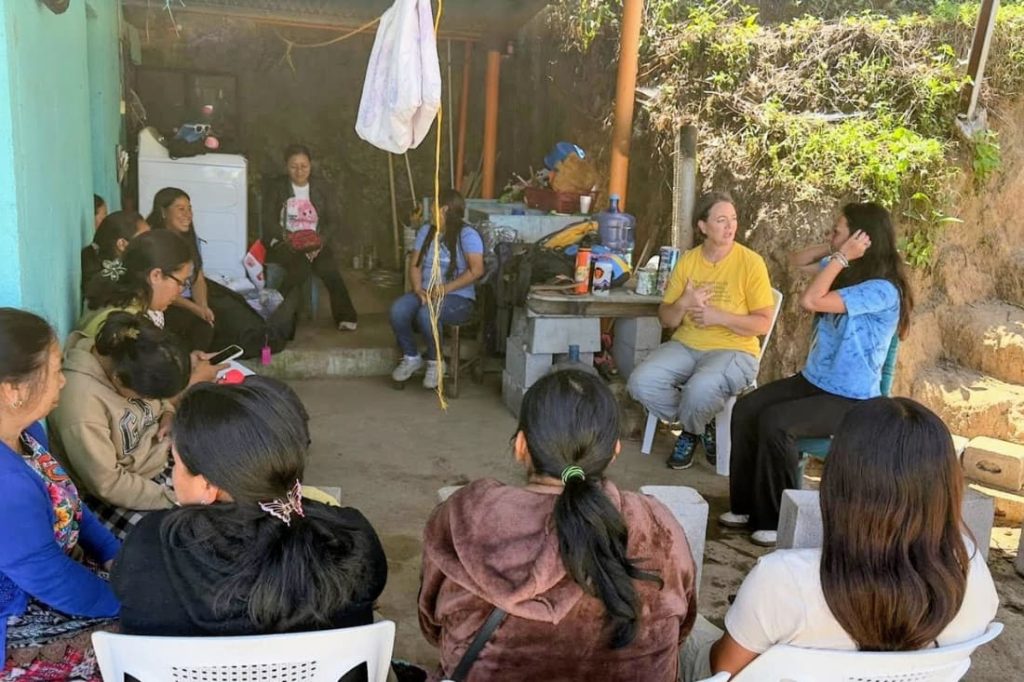 To see how your daily efforts connect to the bigger picture, look at the direct links between your actions and the parts of poverty easing. Your work is planned, even if it feels simple and human.
Connecting Your Work to Change
| Your Volunteer Activity | The Poverty Root It Addresses | The Long-Term Outcome |
| Building Garden Towers | Food Insecurity & Lack of Assets | Creates a lasting food source and possible small income, lowering household costs. |
| Distributing Water Filters | Poor Health & Lost Productivity | Reduces waterborne disease, saving family money on medicine and keeping kids in school. |
| Supporting School Feeding Programs | Hunger & Educational Barriers | Gives steady food so children can focus and learn, breaking the cycle of low education. |
| Assisting in English Classes | Limited Economic Opportunity | Builds useful skills for youth, opening future job choices beyond basic farming. |
Evaluating the operational matrix demonstrates how tactical field tasks match long-term strategic outcomes.
Rather than providing arbitrary labor, synchronized actions directly support infrastructure priorities established by local indigenous councils. It builds the relationships and shared joy that make this hard work last.
Your days are full, usually five to seven hours of active work, with time to relax and think only after dinner when you travel with us on this guided community experience. The trip lasts eight to eleven days, a meaningful length of time that lets you see progress and form real bonds.
What Is the Sponsor’s Role in Funding Poverty Alleviation Programs?
Credits: Be Humanitarian
The work you start on your trip does not end when you leave. This is where the journey often grows into a lasting promise, sponsorship.
Consistent support helps fund poverty alleviation programs in Guatemala that continue creating opportunities long after volunteers return home.
A one-time gift might buy a water filter, but a monthly sponsorship makes sure a child gets breakfast and lunch at school for a whole year. It pays for the training for the local farm helper who helps ten families improve their gardens.
For professionals seeking measurable social outcomes, structured monthly sponsorships deliver the consistent capital necessary to sustain regional infrastructure across multiple crop cycles.
Recurring funding shifts the intervention model from temporary disaster relief to permanent social capital investment.
You become part of a family’s story through ongoing sponsorship donations, getting updates and letters that show how your partnership is helping them build a more stable future. The hands-on work you did planted the seed. Your ongoing sponsorship is the water and sunlight that helps it grow into a tree that can weather storms.
FAQ
How can I keep supporting rural communities after my volunteer trip?
Many volunteers continue supporting rural community support through a monthly donation or Guatemala child sponsorship after returning home. Continued support helps local families Guatemala improve food security, education, and household stability.
This long-term commitment strengthens community development in Guatemala and creates lasting impact by supporting programs that continue throughout the year.
Are volunteer trips suitable for older adults and retirees?
Yes. Many older professionals volunteers and retired volunteers Guatemala participate in Guatemalan service trips because they want meaningful travel and service experiences. You do not need previous volunteer experience.
Your professional skills, life experience, and willingness to work with others can strengthen community partnership Guatemala and help empower families through practical community projects.
How do volunteers help reduce rural poverty in Guatemala?
Volunteers contribute to poverty alleviation programs by supporting projects planned with local communities. They may assist with sustainable agriculture, farmer training programs, educational support Guatemala, or community-led development.
These efforts strengthen rural livelihoods, improve food security Guatemala, and support reducing rural poverty through practical, long-term solutions that families can continue using.
Can volunteering lead to long-term support for local families?
Yes. Many volunteers choose to sponsor a family after seeing local needs during their volunteer vacation Guatemala. Through relationship-based giving, ethical sponsorship, and charitable partnership, they continue supporting family empowerment, child development, and sustainable change.
This ongoing commitment extends the sponsor journey and creates lasting impact for rural communities.
Why do many volunteers describe this experience as life changing?
Many volunteers experience emotional fulfillment because they see how their work benefits local families. Through compassion and generosity, meaningful giving, and humanitarian support, they help create hope and opportunity for children and parents.
Seeing these positive changes firsthand inspires many people to continue giving back through purpose-driven giving and ongoing community involvement.
Help Create Lasting Change In Guatemala
Real change takes time, and every small step matters. When you volunteer in Guatemala, you become part of a long-term effort to help families build a better future. Children keep learning, parents keep growing their income, and communities keep moving forward. It’s not about saving people. It’s about working together and supporting goals that matter to them.
Your trip may only last a few days, but the impact can last much longer. If you’re ready to make a real difference, visit Be Humanitarian to learn how you can volunteer in Guatemala and support lasting change.
References
- https://pubmed.ncbi.nlm.nih.gov/29795691/
- https://www.sciencedirect.com/science/article/pii/S2667278225001026