|
Summary Who this is for: Young adults, college students, and recent grads who want to volunteer abroad and are considering a structured humanitarian trip to Guatemala. Key takeaways:
What’s inside:
|
There’s a version of a “volunteer trip abroad” that looks great on an Instagram post and doesn’t do much else. You show up for a few days, paint a wall, take some photos, and leave. The community you visited gets a freshly painted wall they didn’t particularly need.
That’s not what humanitarian trips for young adults have to be. And it’s not what most people signing up for them are actually looking for.
If you’re somewhere between 18 and 30, trying to figure out how to travel with more purpose — or just wanting your summer or semester break to mean something beyond another beach — a structured humanitarian trip to Guatemala can deliver that. The key word is structured. What you do with your time, who you work alongside, and whether the organization you travel with has real, ongoing ties to the community it serves matters more than the destination itself.
Here’s a clear-eyed look at what these trips actually involve, what you’ll get out of them, and what to look for when you’re choosing one.
Why Guatemala for a Humanitarian Trip?
Guatemala is a country that tends to surprise people. Most first-timers expect beautiful scenery — and they get it, between the volcanoes, Lake Atitlan, and the Mayan ruins scattered across the highlands. What catches people off guard is how much there is to engage with beyond the landscape.
About 55% of Guatemala’s population lives below the national poverty line, with rural and indigenous communities facing the steepest challenges in education, nutrition, and access to basic resources. In villages near Lake Atitlan, which is where Be Humanitarian operates, many children still lack consistent access to school meals, learning materials, and safe cooking conditions at home. These aren’t abstract statistics — they’re the daily backdrop of the communities you’ll be working in.
That context matters. It’s what separates a meaningful service trip from a well-intentioned tourist experience. When you understand why the work is needed, the work itself takes on a different weight.
For young adults specifically, Guatemala also offers some practical advantages. It’s a short flight from most U.S. cities — typically 3 to 5 hours from the West Coast and Southeast. Spanish is the official language, which is helpful if you’ve had any exposure to it, and the local team will bridge the gap if you haven’t. The country is accessible without being overly commercialized, which means you’re more likely to have a genuine cultural experience rather than a highly packaged one.
What the Work Actually Looks Like
Most generic descriptions of volunteer trips list “community service” and call it a day. That’s not especially useful if you’re trying to decide whether to spend a week or more of your life — and a meaningful amount of money — on the experience.
On a Be Humanitarian trip, the days are structured and full. You’re not filling time. Here’s what a typical week looks like in practice:
Nutrition and School Programs
Each morning, volunteers help prepare and deliver breakfast to local preschool children. Be Humanitarian’s nutrition program currently provides thousands of meals each month to kids who would otherwise start the school day without eating. Your hands are in that work literally — chopping, cooking, packing, delivering. Then you join the local staff to serve it.
You’ll also help deliver backpacks, books, and school supplies to students and families. These aren’t symbolic donations. The communities receiving them have identified the need directly, and the Be Humanitarian team has built the relationships to make the delivery meaningful rather than transactional.
Home Installations
One of the more tangible projects involves installing wood-burning stoves and garden towers in family homes. Open-fire cooking indoors is a serious health hazard in rural Guatemala, contributing to respiratory illness especially in children and women who spend the most time in the kitchen. A properly installed stove changes that.
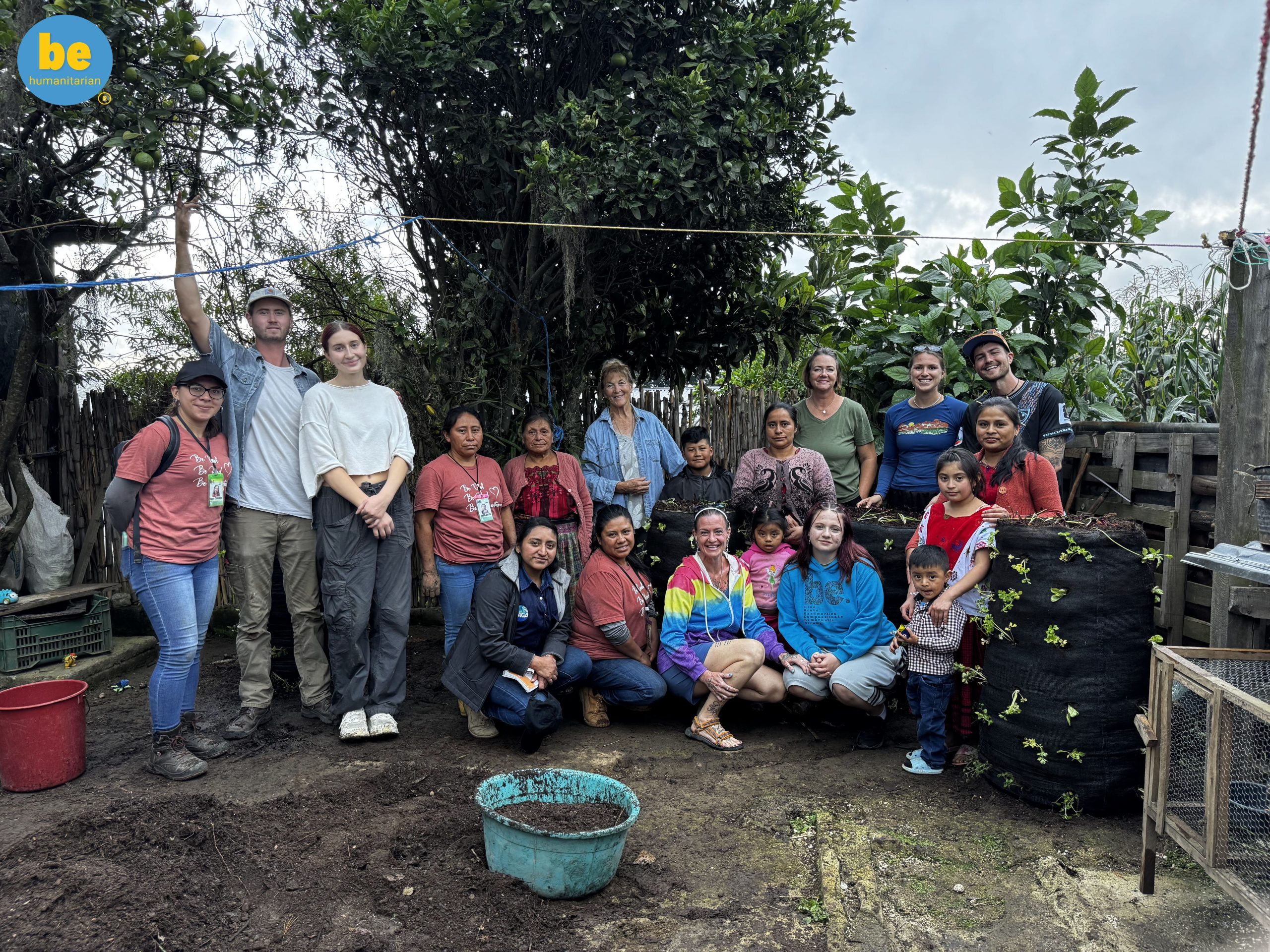
These installations are physical work. You’ll be carrying materials, working alongside local families, and leaving with something concrete completed at the end of the day. The garden towers serve a similar purpose — they allow families to grow vegetables in small spaces, building toward food self-sufficiency over time.
Cultural Experience Built In
The trip isn’t only service work. Be Humanitarian builds in excursions that are genuinely worth the trip on their own: hiking up Volcan Pacaya and roasting marshmallows over active lava, exploring Lake Atitlan by boat, visiting the black sand Pacific beaches, touring ancient Mayan ruins, and spending time in local markets.
This isn’t a reward tacked on at the end. The cultural immersion is part of the experience. You understand the community you’re serving better when you’ve seen how they live, what they celebrate, and what the land looks like that they’ve built their lives around.
How to Tell if a Humanitarian Trip is Actually Ethical
This is a fair question to ask, and the fact that you’re asking it already puts you ahead of most people who book these trips impulsively.
The “voluntourism” industry has a legitimate criticism: too many programs prioritize the emotional experience of the volunteer over the actual needs of the host community. Projects get created to give visitors something to do rather than because the community asked for them. Volunteers with no relevant skills end up doing jobs locals could do better and faster themselves.
When you’re evaluating a humanitarian trip, here are the things that actually matter:
- Does the organization work in the same communities year-round, or only when volunteers are present? Sustainable development doesn’t happen during a one-week visit. It happens through ongoing, consistent programs. Be Humanitarian maintains permanent operations in the Solola department near Lake Atitlan — the nutrition program, the school partnerships, and the family support infrastructure run continuously regardless of who’s visiting.
- Is the local team actually leading the work? Volunteers should be supporting local staff, not replacing them. On Be Humanitarian trips, local community members lead the projects. Volunteers are there to add capacity, not to show up and take over.
- Are the projects tied to identified community needs? A good organization can tell you exactly why the specific work exists — who asked for it, how it fits into a longer-term plan, and what happens after the volunteers go home.
- Is the organization transparent about where your money goes? Reputable nonprofits publish this. Be Humanitarian holds the Candid Seal of Transparency, which means their financials and impact reporting are publicly available.
What to Expect Before, During, and After
Before You Go
You’ll receive detailed prep materials including packing guidance, health recommendations, and an overview of the communities you’ll be working with. You don’t need to speak fluent Spanish. Basic phrases help, but the team handles translation and context throughout the trip. Budget-wise, the trip cost covers accommodation, meals, and excursions — you’re not navigating logistics on your own.
During the Trip
Days start early and stay full. Most service days run five to seven hours of hands-on work, followed by excursions or downtime. You’ll be with a small group — typically a mix of solo travelers, college students, families, and people in their late 20s and early 30s on a career break. The group dynamic tends to be one of the better surprises. People who show up for this kind of trip are generally easy to travel with.
Tobie Spears, Be Humanitarian’s founder, leads most trips personally. That matters more than it might sound. Her relationships with the local communities span over a decade, which means your access to people and experiences isn’t just surface-level. Volunteers regularly end up eating in people’s homes, meeting with local leaders, and having conversations that wouldn’t happen on a standard tour.
After You Return
Most people describe a period of adjustment when they come home. You’ve spent a week or more living simply, working toward something tangible, and building relationships with people whose daily realities are very different from yours. Re-entering normal life can feel strange for a bit.
That’s not a warning — it’s actually a sign the trip did what it was supposed to do. The volunteers who come back and sign up again, or who start sponsoring a child in Guatemala, or who shift how they think about travel altogether — those outcomes don’t happen from trips that were just fun vacations with a service activity bolted on.
Is It Safe to Travel to Guatemala as a Young Adult?
Safety is a legitimate concern, and it’s worth addressing directly rather than brushing past it.
Guatemala City carries a different safety profile than the rural highlands where Be Humanitarian operates. The communities near Lake Atitlan — where volunteers spend the majority of their time — are small, tight-knit villages where your team is known and trusted. You won’t be navigating an unfamiliar city alone.
Be Humanitarian handles all logistics including airport pickup, ground transportation, and accommodation. You’re not figuring out buses or negotiating in an unfamiliar language at 2am. First-time international travelers regularly join these trips, including people who have never traveled solo before. The structure is part of what makes it accessible.
That said, basic travel sense applies: keep your group, don’t flash expensive gear, and follow the guidance of the local team. Nothing unusual for international travel — and considerably more structured than backpacking independently.
Who These Trips Are Best For
Humanitarian trips for young adults work best for people who are genuinely curious about how other people live, who don’t need to be comfortable every moment of every day, and who can engage with work that feels unglamorous and real. You might be serving food at six in the morning. You might be carrying heavy materials in the afternoon heat. The reward isn’t immediate.
They’re a particularly good fit for college students looking for international experience that goes beyond a study abroad semester, for recent graduates figuring out what direction to head in next, and for anyone who has wanted to do something meaningful with a vacation budget but hasn’t known where to start.
They’re also a strong option if you’re interested in global health, education, nonprofit work, international development, or social entrepreneurship — not because you’ll come back with a credential, but because there’s no substitute for seeing what these issues look like on the ground, in a specific community, with a specific family’s face attached to them.
| Ready to See What a Humanitarian Trip Actually Feels Like?
Be Humanitarian runs volunteer vacations to Guatemala throughout the year, each one designed for small groups with a mix of service work, cultural excursions, and genuine community access. Trips are 8 to 11 days and open to adults of any age — including solo travelers joining for the first time. |
Frequently Asked Questions About Humanitarian Trips for Young Adults
Do I need any special skills or experience to go on a humanitarian trip?
No. Most humanitarian trip organizations — including Be Humanitarian — design their programs so that volunteers with no prior experience can participate meaningfully. You’ll work alongside local staff who lead the projects. What matters most is showing up with a willingness to follow directions, work hard, and engage respectfully with the community.
How much do humanitarian trips for young adults typically cost?
Costs vary by organization and trip length, but a structured 8 to 11-day trip that includes accommodation, meals, excursions, and ground transportation typically ranges from $2,000 to $3,500, not including international flights. Be Humanitarian trips are priced in that range. Some costs may be tax-deductible through a 501(c)(3) nonprofit — check with your organization and a tax advisor.
Can I go on a humanitarian trip alone, or do I need to travel with a group?
Solo travelers are common on Be Humanitarian trips. You’ll join a small group of other volunteers once you arrive, so you’re never actually on your own. Many people specifically choose to go solo because they want to meet people outside their usual circle — and the shared work and travel experience tends to build connections quickly.
Do I need to speak Spanish to volunteer in Guatemala?
Spanish is helpful but not required. Be Humanitarian’s local team handles translation and context throughout the trip. Basic phrases — greetings, thank you, simple questions — go a long way and will be appreciated. You’ll likely pick up more than you expect just from being around the community for a week.
What’s the difference between a humanitarian trip and voluntourism?
The terms get used interchangeably, but there’s a meaningful distinction. Voluntourism often refers to programs where the volunteer experience is the primary product — the community benefit is secondary. A humanitarian trip, done well, centers the community’s needs first and treats the volunteer experience as a byproduct of doing useful work. The distinction shows up in how organizations choose their projects, who leads the work on the ground, and whether the programs exist year-round or only when visitors are around.
Is Guatemala safe for young adults traveling for the first time internationally?
The rural communities where Be Humanitarian operates near Lake Atitlan are consistently described by first-time volunteers as safe, welcoming, and well-managed. The organization handles all logistics including airport pickup and ground transportation. Travelers are not navigating the country independently. Standard international travel precautions apply, and the local team provides context and guidance throughout.
How long do humanitarian trips to Guatemala typically run?
Be Humanitarian trips run 8 to 11 days. That’s generally considered the minimum length for a trip to be genuinely useful to the community — shorter programs don’t allow enough time for volunteers to get oriented before they’re gone. Longer isn’t always better, but a week-plus commitment tends to produce more meaningful experiences on both sides.
What kinds of work will I actually be doing on a humanitarian trip to Guatemala?
On a Be Humanitarian trip, the work varies day to day but typically includes preparing and serving meals to preschool children, delivering school supplies and backpacks to students and families, installing wood-burning stoves and garden towers in family homes, and visiting communities alongside the local program staff. It is physical, hands-on work — not desk work or administrative tasks.
Will I have any free time or get to see Guatemala beyond the service work?
Yes, and this is intentional. Be Humanitarian builds cultural excursions into every trip — hiking a volcano, exploring Lake Atitlan, visiting Mayan ruins, spending time in local markets, and more. These aren’t filler activities. Understanding the country and its culture gives the service work more context and makes the overall experience more complete.
Can a humanitarian trip count toward college credit or a resume?
It depends on your school and program. Some universities offer academic credit for international service learning experiences — check with your academic advisor before you go. Whether or not there’s formal credit involved, international humanitarian experience is genuinely valuable on a resume in fields like public health, international development, nonprofit management, education, and social work. It shows initiative, cross-cultural competence, and a willingness to do real work in unfamiliar settings.