Corporate philanthropy volunteer projects in Guatemala work best when companies help trusted local groups. Be Humanitarian offers guided 8 to 11-day volunteer trips near Lake Atitlán.
Teams help with education, clean water, nutrition, and other community programs. The work is based on what local families need most. Many people choose to sponsor a child after the trip so they can keep helping.
Keep reading to see how these volunteer trips work and how your team can make a real difference.
Why Companies Choose Corporate Philanthropy In Guatemala
- Support long-term community programs through trusted nonprofit partnerships.
- Help improve education, nutrition, clean water, and community development while building stronger teams.
- Continue making a difference through child sponsorship after the volunteer experience.
What Are Corporate Philanthropy Projects Guatemala?
 Corporate philanthropy projects in Guatemala bring companies and local communities together. Instead of one-time charity events, the focus is on helping local programs grow over time.
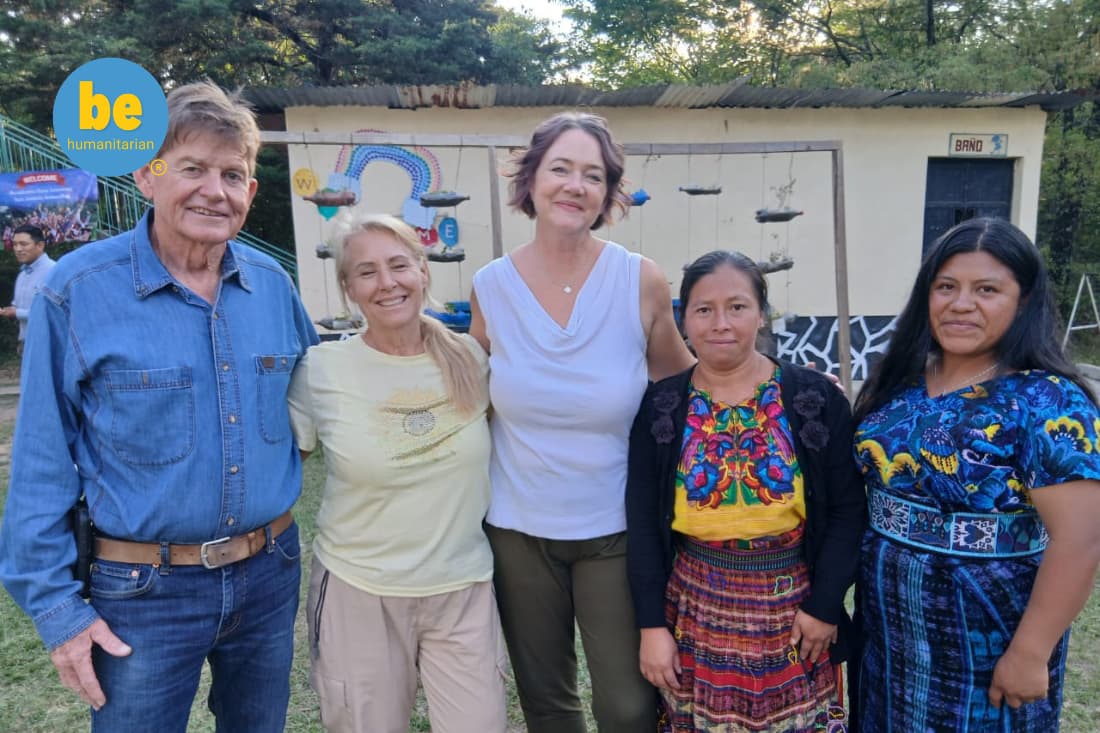
Having coordinated corporate volunteer teams on the ground in Guatemala, I’ve seen firsthand how corporate philanthropy projects function in San Andrés, near Lake Atitlán.
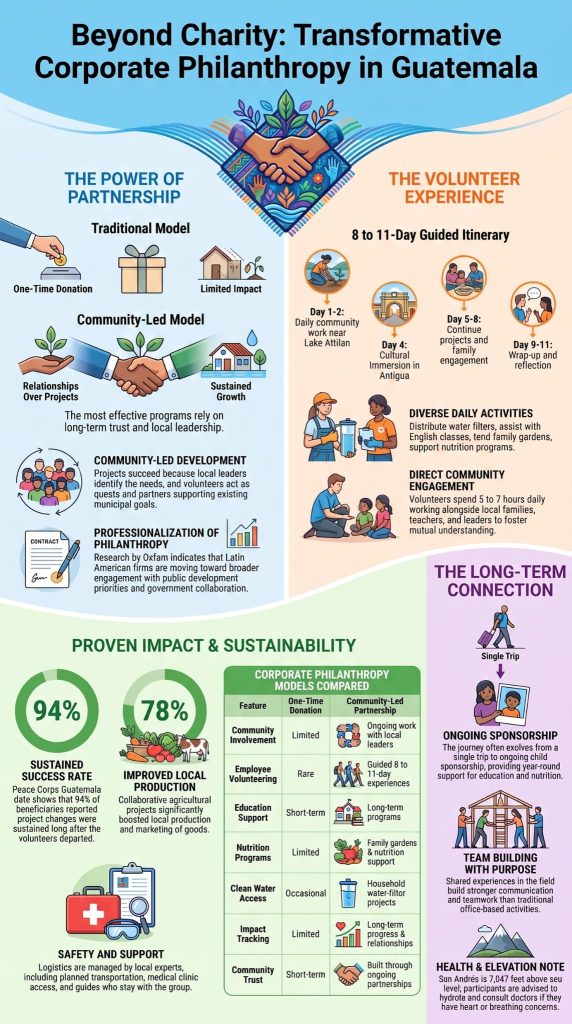
Teams typically spend 5 to 7 hours each day working directly alongside local families, teachers, and community leaders. Together, they support education, clean water, nutrition, and other community programs.
Volunteer activities may include:
- Distributing household water filters
- Helping with English classes
- Working in family gardens
- Playing soccer with local children
- Visiting sponsored children and families
- Supporting education and nutrition programs
Each day also includes time to talk with local families and learn about their lives. These simple conversations often leave the biggest impression.
Evenings are calm. Teams talk about the day’s work, spend time together, and get ready for the next day. By the end of the trip, many people have made real friendships with the families and communities they met. Those connections often last long after they return home.
Why Engage in Guatemala Corporate Philanthropy?
Purpose-driven Guatemala corporate philanthropy helps both communities and employees. It gives teams the chance to work together while supporting projects that make a real difference.
In Guatemala, teams spend time with local families, teachers, and community leaders instead of sitting in meeting rooms. Working together on community projects often builds stronger connections than traditional team-building activities.
Benefits may include:
- Better teamwork
- Stronger communication
- Cultural learning
- A better understanding of community needs
- Shared experiences that last beyond the trip
These volunteer experiences support programs that local communities already lead. Community members identify the needs, and local leaders guide the work. Volunteers help by giving their time and supporting ongoing projects.
Many participants leave with a deeper connection to the community. Some choose to continue helping by sponsoring a child, supporting education, nutrition, and other long-term community programs.
Why Relationships Matter More Than Projects
The best volunteer programs are built on strong relationships, not just completed projects.
In San Andrés, volunteers often see local staff greeting families by name. Teachers know their students well. Parents proudly show their gardens, and children enjoy spending time with volunteers who return year after year.
Data from ASABE Technical Library demonstrates
“The results indicate that the low-input system was most resistant to environmental degradation and price shocks, but more sensitive to social factors, such as community disintegration (migration).” – ASABE Technical Library
These moments happen because Be Humanitarian has worked with the community for many years. Instead of creating short-term projects, the organization supports long-term partnerships.
Visitors join the community as guests and partners. This helps build trust and creates a more meaningful experience for everyone involved.
Who Manages Guatemala Corporate Social Programs?
The best corporate philanthropy programs in Guatemala are built with local partners. Nonprofits, community leaders, and volunteers work together to support programs that already help local families.
In a recent analysis by Taylor & Francis (Routledge)
“Latin American firms are moving from narrow philanthropy to broader engagement with development priorities… Most participants were willing to steer efforts towards public priorities (professionalisation) and collaborate with government (partnering).” – Taylor & Francis (Routledge)
Reputable non-profit partners in the region follow this corporate social programs approach. For example, programs like Be Humanitarian structure their itineraries around local leadership, ensuring visiting corporate groups support existing municipal goals rather than imposing external priorities.
Safety is also important. Guides stay with the group, transportation is planned, and nearby medical clinics are available if needed. San Andrés is about 7,047 feet (2,148 meters) above sea level. If you have heart or breathing problems, talk to your doctor before the trip.
Instead of creating new projects, volunteers help with programs that are already making a difference. These include education, nutrition, family gardens, and family support. Working with local leaders helps these programs continue to grow.
Sponsor Large Scale Guatemala Corporate Charity
The biggest impact comes when companies help communities over many years, not through one-time projects. Many businesses in Guatemala work with local nonprofits to support education, health, clean water, and other community programs.
Be Humanitarian does the same. Instead of starting new projects for every trip, the organization helps support programs that are already helping local families in San Andrés, near Lake Atitlán. These include education, nutrition, clean water, and child development programs.
Companies can get involved through corporate charity initiatives such as:
- Sponsoring employee volunteer trips
- Supporting clean water projects
- Expanding English learning programs
- Helping fund community gardens
- Sponsoring a child
- Supporting community projects identified by local leaders
Each contribution helps strengthen programs that continue throughout the year. Businesses can also see how their support helps local families over time. This includes better education, improved nutrition, clean water, and other community programs.
From Volunteer to Child Sponsor
For many volunteers, the trip does not end when they go home. Meeting children, visiting schools, and spending time with local families often creates lasting friendships.
Many people choose to sponsor a child after their trip. Their support helps pay for education and supports community programs throughout the year.
Be Humanitarian sees child sponsorship as a long-term partnership. Sponsors stay connected with the children and communities they have met while helping create more opportunities.
Business owners and companies can also sponsor one or more children. It is a simple way to keep supporting the community long after the volunteer trip is over.
Corporate Philanthropy Models Compared
Credits: Be Humanitarian
The way a company gives can make a big difference. One-time donations can help, but long-term partnerships often create a greater and more lasting impact.
| Approach | One-Time Donation | Community-Led Partnership With Be Humanitarian |
| Community Involvement | Limited | Ongoing work with local leaders |
| Employee Volunteering | Rare | Guided 8 to 11-day volunteer experiences |
| Education Support | Short-term | Long-term education programs |
| Nutrition Programs | Limited | Family gardens and nutrition support |
| Clean Water Access | Occasional | Household water filter projects |
| Child Sponsorship | Not usually included | Ongoing child sponsorship opportunities |
| Impact Tracking | Limited | Long-term progress and relationships |
| Community Trust | Short-term | Built through ongoing partnerships |
This comparison shows why many businesses choose long-term partnerships instead of one-time giving. By supporting community-led programs over time, companies can build stronger relationships and help create lasting change.
Planning a Corporate Volunteer Experience in Guatemala
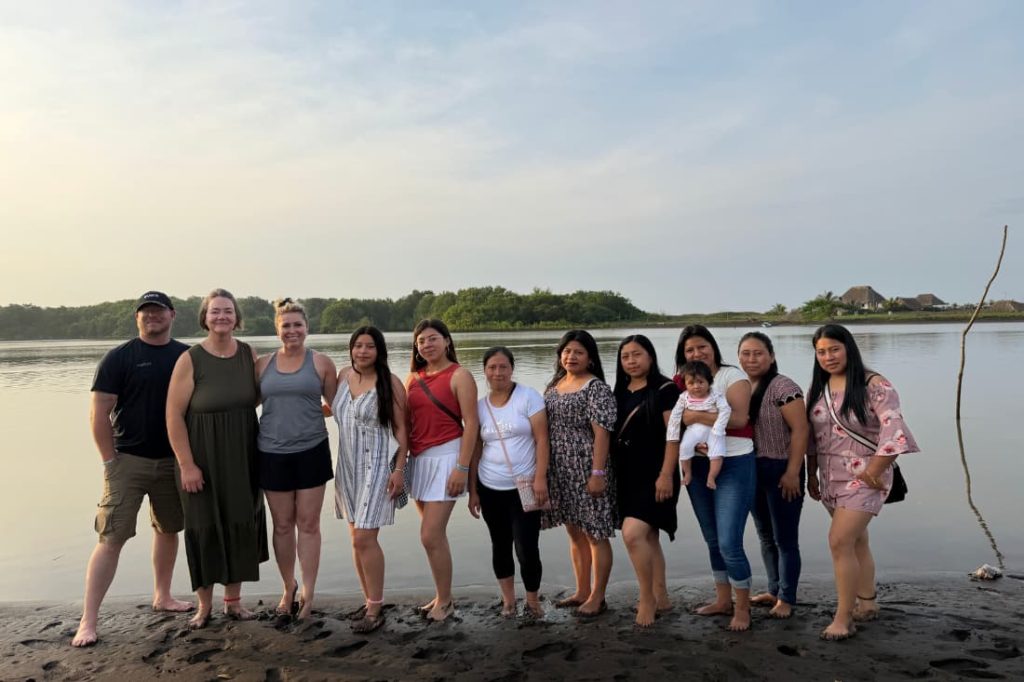
A good volunteer trip starts with good planning. Be Humanitarian offers guided 8 to 11-day volunteer trips led by Tobie Spears and a local team.
They take care of transportation, places to stay, daily plans, and community visits, so you can focus on helping others.
Most of the volunteer work takes place in San Andrés, where teams work with local families. The trip also includes a one-day visit to Antigua to learn about Guatemala’s history and culture.
San Andrés is about 7,047 feet (2,148 meters) above sea level. If you have heart or breathing problems, talk to your doctor before you travel. Drink plenty of water and take it easy during your first few days to help your body adjust.
During the trip, guides stay with the group, transportation is provided, and nearby medical clinics are available if needed. This lets you focus on helping the community, making new friends, and enjoying the experience.
FAQ
What makes corporate philanthropy projects successful in Guatemala?
Sustainable corporate philanthropy relies on long-term community investments rather than short-term donations. Effective programs combine strong non-profit leadership, clear stakeholder communication, and transparent governance to deliver measurable, lasting benefits.
Many initiatives support education projects, health projects, nutrition programmes, and rural development while using impact measurement to evaluate local impact and improve future programmes.
How can companies support communities beyond financial donations?
Companies can combine corporate giving with employee volunteering, volunteer corporate programs, corporate charity partnerships, and community outreach.
Many businesses also contribute through sponsorship programmes, community grants, grantmaking, philanthropic funding, and charitable sponsorship.
This balanced approach strengthens community engagement, supports social good, and builds long-term relationships through partnership-based philanthropy.
Which community projects create lasting social impact?
Projects that focus on sustainable development often deliver the strongest long-term results. Examples include education projects, child welfare programmes, livelihood support, women’s empowerment, environmental stewardship, and reforestation projects.
WASH projects that improve clean water access, sanitation improvements, and hygiene education also strengthen communities while supporting poverty alleviation and long-term community support.
How do companies measure the results of philanthropy projects?
Organizations measure success by evaluating impact measurement, social return on investment, sustainability reporting, and project outcomes. They also review program implementation, beneficiary outreach, community development, and capacity building.
These evaluations help businesses strengthen their philanthropy strategy, improve ESG initiatives, and demonstrate accountability through measurable social change.
How should businesses choose a nonprofit partner in Guatemala?
Businesses should choose organizations with strong nonprofit management, transparent governance, and proven experience working through local NGO partnerships.
Review the organization’s accountability, development partnerships, fundraising strategy, and record of successful project implementation.
A reliable partner should demonstrate responsible business practices and a clear commitment to delivering lasting community development.
Build Lasting Partnerships Through Volunteer Projects In Guatemala
Corporate philanthropy volunteer projects in Guatemala help local communities grow. Businesses and volunteers work with local families to support education, clean water, healthy food, and other community programs. The goal is to help projects that continue long after the trip is over.
Whether you join with your company or travel on your own, you can make a real difference. Explore Be Humanitarian’s corporate philanthropy volunteer projects in Guatemala and learn how you can help local families build a brighter future.
References
- https://elibrary.asabe.org/abstract.asp?aid=46322
- https://www.tandfonline.com/doi/abs/10.1080/09614524.2012.713324